There are few things more frustrating on a backpacking trip than waking up to water dripping onto your face, only to realize it never rained. Many beginners mistakenly believe their shelter has a leak, but the real culprit is usually a natural physical process. Finding effective condensation in tent solutions is a rite of passage for every hiker, especially those transitioning to lighter gear systems.
Understanding why moisture forms inside your shelter is the first step to mitigating it. By learning how to manage your environment, adjust your pitch, and choose the right campsite, you can keep your sleeping bag dry and your mornings much more comfortable.
The Science: Why Does Your Tent Get Wet?
Before we can fix the problem, we must define exactly what is happening inside your shelter while you sleep.
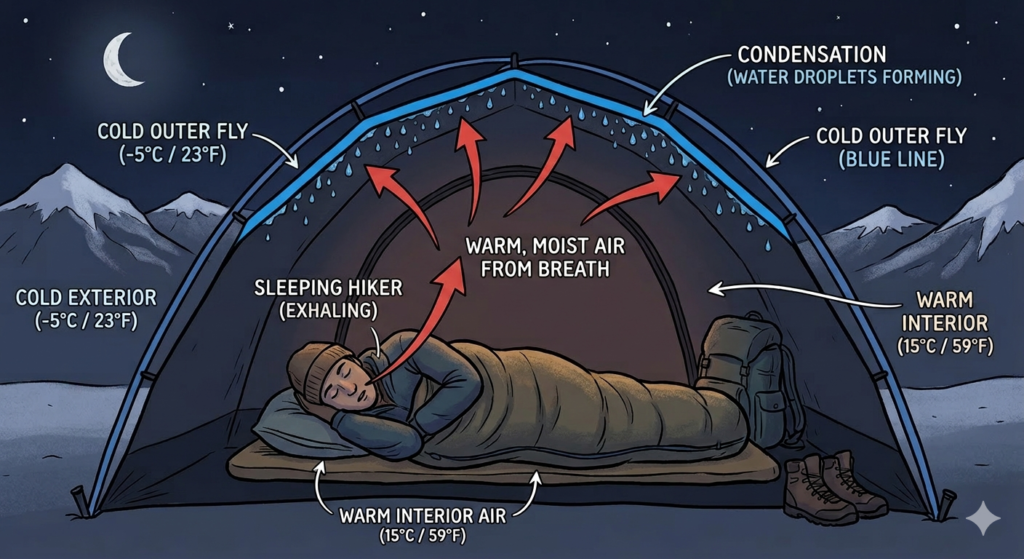
Condensation in a tent occurs when warm, moisture-laden air from your breath, body heat, and wet gear collides with the cold internal fabric of your shelter. As the air cools against the tent wall, it loses its ability to hold water vapor, converting it into liquid droplets.
Every time you exhale, you release moisture into the air. A single person can exhale up to half a liter of water in a single night. When you add high camping humidity from damp ground or wet clothing, the air inside your small shelter quickly becomes saturated.
Single Wall Tents vs. Double Wall Tents
Your shelter’s design dictates how you interact with condensation. Traditional hikers typically use double-wall tents, which feature a solid rainfly and an inner mesh body. The condensation forms on the inside of the outer rainfly, while the inner mesh acts as a physical barrier, keeping your sleeping bag away from the wet fabric.
However, as discussed in our guide on Mastering Base Weight: The “Big 3” Explained, ultralight hikers often utilize single wall tents or tarps to save significant weight.
In a single-wall shelter, there is no protective inner mesh. You are sleeping directly under the fabric where the condensation forms. This means if you brush against the wall, your quilt gets wet. Therefore, managing moisture actively is a mandatory skill for ultralight backpackers.
Top Condensation in Tent Solutions
You cannot change the laws of physics, but you can alter your environment. Here are the most effective strategies for keeping the inside of your shelter dry.
1. Maximize Tent Ventilation
Airflow is your greatest weapon against moisture. You want the warm, wet air you exhale to blow out of the tent before it hits the cold walls.
- Keep doors open: If it is not raining or excessively windy, leave the vestibule doors rolled up.
- Pitch high: If using a tarp or a trekking pole tent, adjust your pitch so the bottom edges of the fabric are a few inches off the ground, allowing a cross-breeze to sweep through.
- Open all vents: Always prop open the apex vents at the top of your shelter to allow rising warm air to escape.
2. Strategic Site Selection
Where you pitch your tent drastically affects camping humidity.
- Avoid water: Do not camp right next to lakes, streams, or bogs. The air here is already saturated with moisture.
- Avoid low spots: Cold, heavy air settles in valleys and depressions. Pitch your tent on slightly elevated ground or halfway up a hill.
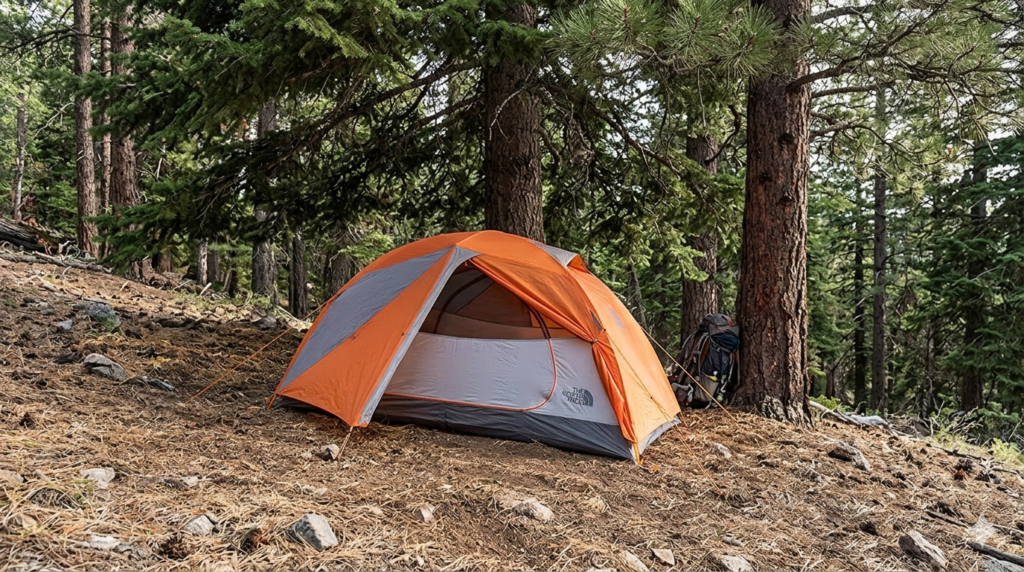
- Camp under trees: Trees act as an insulating blanket, reducing radiant heat loss from your tent. A tent pitched under a tree canopy will stay slightly warmer, drastically reducing condensation compared to a tent pitched in an open meadow.
Managing Moisture Inside the Shelter
Even with perfect ventilation and site selection, certain weather conditions (like cold, still, and rainy nights) make condensation unavoidable. In these scenarios, you must manage the moisture directly.
Avoid bringing wet gear into the tent. Leave wet rain jackets and muddy shoes in the vestibule. Furthermore, avoid cooking inside or near the door of your tent, as boiling water releases massive amounts of steam directly into your shelter.
When you wake up to wet walls, do not let the water pool. Keep a small microfiber towel readily accessible in your sleep area. Take one minute to gently wipe down the interior walls in the morning before the droplets grow large enough to rain down onto your delicate down sleeping bag.
Conclusion
Waking up dry is a combination of good gear, environmental awareness, and proactive habits. While you cannot banish morning dew entirely, applying these condensation in tent solutions will significantly improve your trail experience. By prioritizing tent ventilation, mastering site selection, and understanding the limitations of single wall tents, you can protect your sleep system and enjoy a warmer, more comfortable hike.
Frequently Asked Questions (FAQ)
1. Does a ground footprint help reduce condensation?
Yes. A significant amount of moisture evaporates upward from the soil and grass beneath you. A waterproof ground sheet (footprint) blocks this moisture from entering your tent’s microclimate.
2. Why is my tent wet inside when it didn’t rain?
This is purely condensation. The moisture comes from your breath, your sweat, and the damp ground. When it hits the cold tent fabric, it turns into liquid water.
3. Is condensation worse in winter or summer?
It is generally worse in cold weather (winter, early spring, late fall). Condensation is driven by the temperature differential between the warm air inside the tent and the cold air outside. Colder outside air leads to colder tent fabric, accelerating the condensation process.
4. Do tent vents actually do anything?
Yes, peak vents are crucial. Warm, moist air rises from your body as you sleep. If the top of the tent is completely sealed, the moisture is trapped. A vent allows that specific column of wet air to escape into the night sky.
5. Can a candle lantern reduce condensation?
While some traditional campers use candle lanterns to slightly warm the air and dry out a tent, this is highly dangerous in modern, small nylon backpacking tents. The fire risk and carbon monoxide danger far outweigh the minimal condensation benefits. Rely on ventilation instead.