When a hiker decides to lighten their load, the first instinct is often to cut the handle off a toothbrush or leave the extra pair of socks at home. While these micro-adjustments count, they are not the most efficient way to drop significant poundage. To make a real impact on your hiking experience, you must apply the Pareto Principle (the 80/20 rule) to your gear.
In the world of ultralight hiking, this principle manifests as “The Big 3.” By addressing these three specific categories, you can often cut 5 to 10 pounds (2–4.5 kg) from your load in a single sweep, transforming your hike from a grueling haul into an agile adventure.
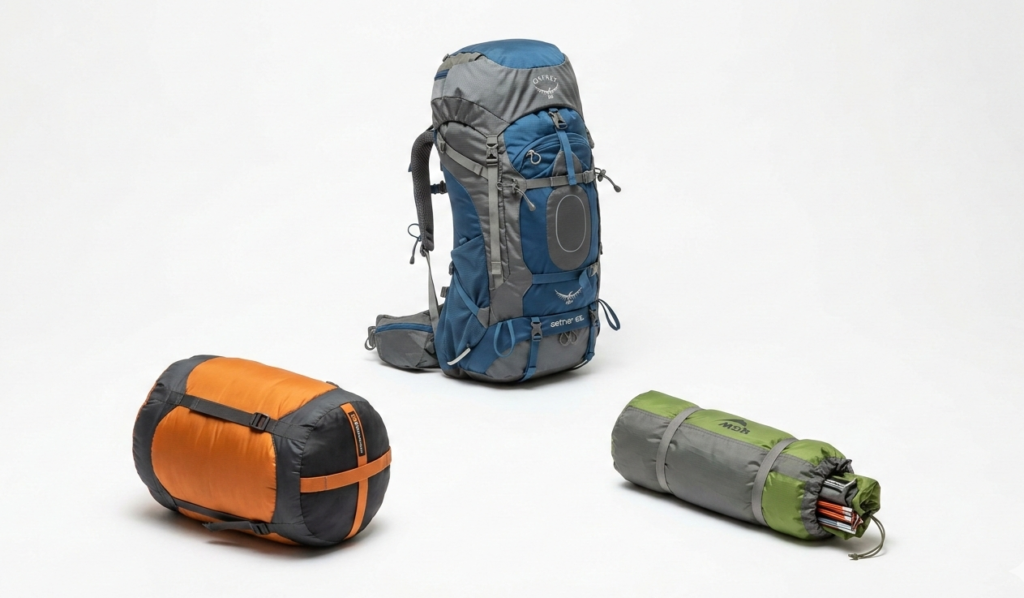
What Are The Big 3?
Before you start swiping your credit card for new gear, you need to understand the definitions and weight targets.
The “Big 3” refers to the three heaviest categories of gear in a backpacker’s base weight: the Shelter (tent/tarp), the Sleep System (sleeping bag/quilt and pad), and the Backpack itself. Reducing the collective weight of these items is the primary strategy for reducing base weight efficiently.
For a traditional hiker, the Big 3 might weigh over 15 lbs (6.8 kg). For an ultralight hiker, the goal is to get the Big 3 under 6 lbs (2.7 kg) total.
1. The Backpacking Shelter
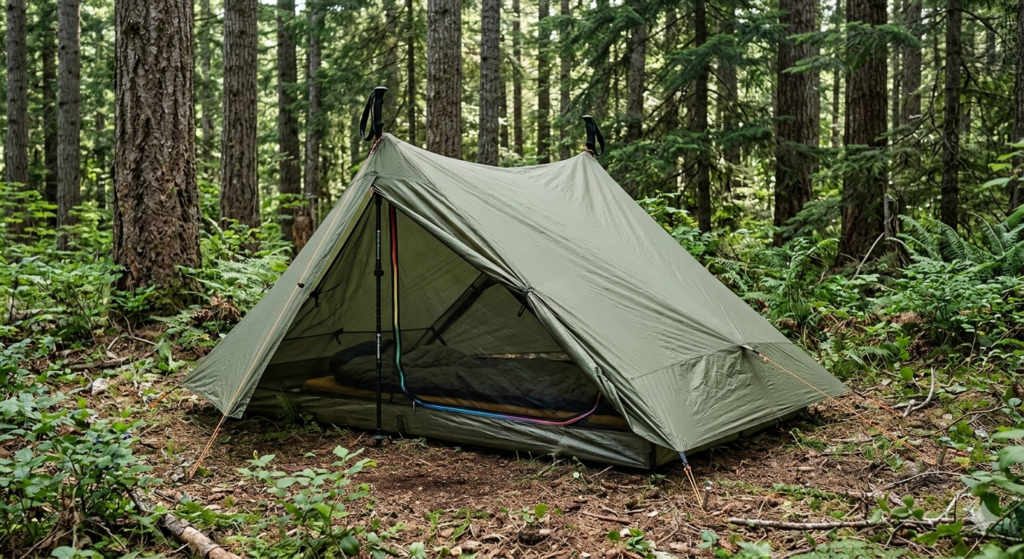
The shelter is often the single heaviest item in a pack. Traditional double-wall tents with dedicated poles often weigh between 4 and 6 pounds. They are bombproof and comfortable, but they are overkill for most 3-season trails.
To reduce weight here, ultralight hikers often switch to:
- Trekking Pole Tents: These utilize the hiking poles you are already carrying to support the structure, eliminating the weight of dedicated tent poles.
- Tarps: A simple waterproof sheet rigged with guy lines.
- Single-Wall Tents: Tents where the rainfly and the inner mesh are sewn together to save fabric weight.
Target Weight: An ultralight shelter should weigh between 1 lb and 2 lbs (0.45–0.9 kg).
2. The Sleep System
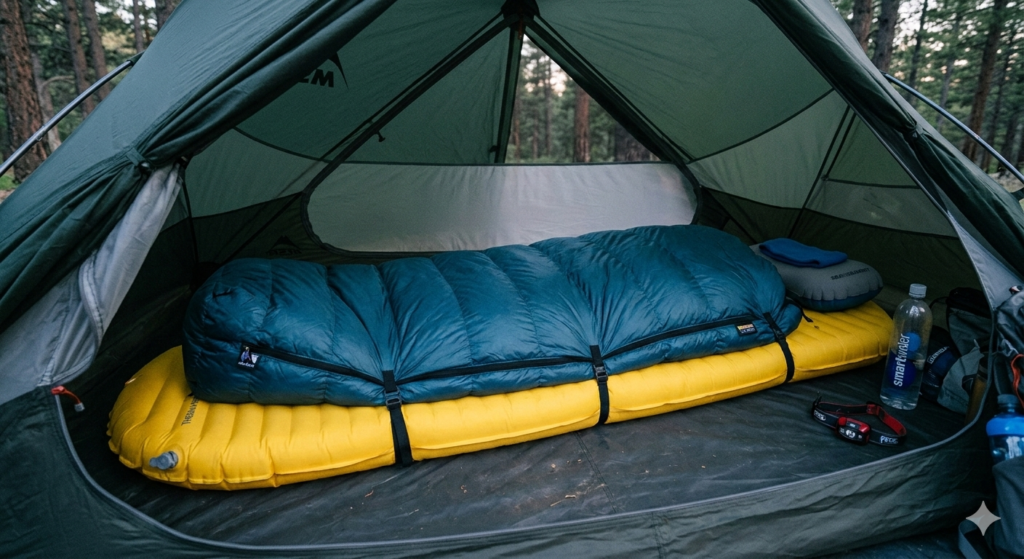
Your sleep system includes everything keeping you warm at night: your insulation (bag/quilt) and your ground insulation (sleeping pad).
The Quilt vs. Sleeping Bag
Traditional mummy bags wrap entirely around you. However, the insulation compressed underneath your body by your weight provides zero warmth because it has no loft. Ultralight hikers switch to backpacking quilts, which remove the back/bottom fabric and the hood. This saves substantial weight and volume without sacrificing warmth, provided you strap the quilt correctly to your pad.
The Sleeping Pad
The pad is crucial for both comfort and warmth (R-Value).
- Foam Pads (CCF): Extremely light (often under 10 oz) and durable, but bulky and less comfortable.
- Inflatable Pads: More comfortable and packable, but heavier and prone to punctures.
Target Weight: A combined sleep system (quilt + pad) should weigh roughly 1.5 to 2.5 lbs (0.7–1.1 kg).
3. The Backpack
The backpack is the vessel that holds your life on the trail. A common mistake beginners make is buying the pack first. As mentioned in our guide on “How to Transition to Ultralight: A Step-by-Step Guide“, you should always buy the pack last.
Traditional packs have heavy internal frames, thick padding, and heavy fabrics (like canvas or high-denier nylon) to support loads of 40+ pounds. They often weigh 4 to 6 pounds empty.
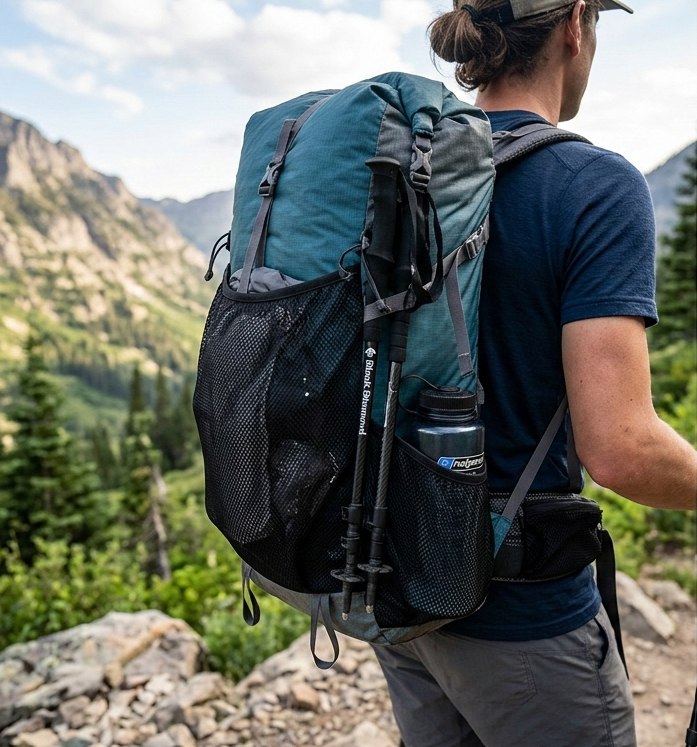
Ultralight packs strip away the excess.
- Frameless Packs: Rely on your sleeping pad (folded inside) to create a “virtual frame” against your back.
- Lightweight Framed Packs: Use simple carbon fiber stays or aluminum loops to transfer weight to the hips.
- Materials: Use high-tech fabrics like Dyneema or Robic Nylon which are stronger and lighter than traditional materials.
Target Weight: An ultralight pack should weigh between 1 lb and 2 lbs (0.45–0.9 kg).
The Cost of Lightness
Optimizing your Big 3 backpacking gear is the most expensive part of the transition. High-fill power down (850+ fill) and Dyneema Composite Fabrics (DCF) are costly materials.
However, you do not need to spend a fortune to be light.
- Budget Strategy: Use a silnylon tarp (cheap/light), a foam pad (cheap/light), and a synthetic quilt.
- Premium Strategy: Use a DCF tent (expensive/lightest), a high-end inflatable pad, and a 950-fill down quilt.
Both strategies can achieve a low base weight; the difference is mostly in packability and durability.
Conclusion
Mastering the Big 3 is the turning point in any hiker’s journey toward reducing base weight. By focusing your energy and budget on your Shelter, Sleep System, and Backpack, you achieve the greatest return on investment for your physical effort. Once these three anchors are optimized, the rest of your kit can be refined over time, but the heavy lifting is already done.
Frequently Asked Questions (FAQ)
1. Should I buy a tent or a hammock?
Hammocks can be comfortable, but they are rarely lighter than a ground setup once you factor in the tarp, hammock body, suspension straps, and under-quilt. Ground systems (tents/tarps) are generally the lighter option for pure ultralight hiking.
2. Is a quilt as warm as a sleeping bag?
Yes, if used correctly. A 20°F quilt has the same amount of lofted down on top of you as a 20°F sleeping bag. The key is using pad straps to prevent drafts from entering the sides when you move at night.
3. What is R-Value?
R-Value measures a sleeping pad’s resistance to heat flow. The higher the number, the warmer the pad. For 3-season backpacking, look for an R-Value of 2.5 to 4.0. Using a pad with low R-Value will make you cold, regardless of how good your quilt is.
4. Can a frameless pack carry a bear canister?
Yes. Most 40L+ frameless packs can fit a bear canister vertically or strapped to the top. However, the canister adds rigidity and weight, so ensure your total pack weight stays under the recommended limit for the pack (usually 20-25 lbs).
5. Why buy the backpack last?
If you buy a 40L ultralight pack first, but your bulky synthetic sleeping bag and traditional tent don’t fit inside, the pack is useless. You must reduce the volume and weight of your gear first, then buy the pack that fits your new, smaller kit.