A good night’s sleep on the trail is not a luxury; it is a safety requirement. Waking up with a stiff neck or a massive headache can completely ruin your next day of hiking. However, as hikers look to shave ounces from their base weight, the dedicated camping pillow is often one of the first luxury items left on the cutting room floor.
Finding effective ultralight pillow alternatives is a fantastic way to maintain sleep quality while adhering to a minimalist philosophy. Commercial inflatable pillows can be expensive, surprisingly heavy, and prone to punctures. Fortunately, with a little creativity and the gear you are already carrying, you can build a highly comfortable headrest for zero extra cost.

Rethinking Camp Comfort
Before diving into specific backpacking pillow hacks, it helps to understand what makes a good pillow in the backcountry. You need two things: volume (to align your neck with your spine) and softness (to feel comfortable against your face).
Ultralight pillow alternatives are DIY or multi-purpose solutions used by hikers to support their head while sleeping, eliminating the need to carry a dedicated, heavy camping pillow. Common methods include using a stuffed clothing sack, a folded fleece jacket, or a versatile neck gaiter to create comfortable head support.
By utilizing items that already serve a primary function during the day, you maximize efficiency. This multi-use mindset is a core principle we discuss thoroughly in our guide on Mastering Base Weight: The “Big 3” Explained, where optimizing your sleep system is paramount.
The Classic: The Stuff Sack Pillow
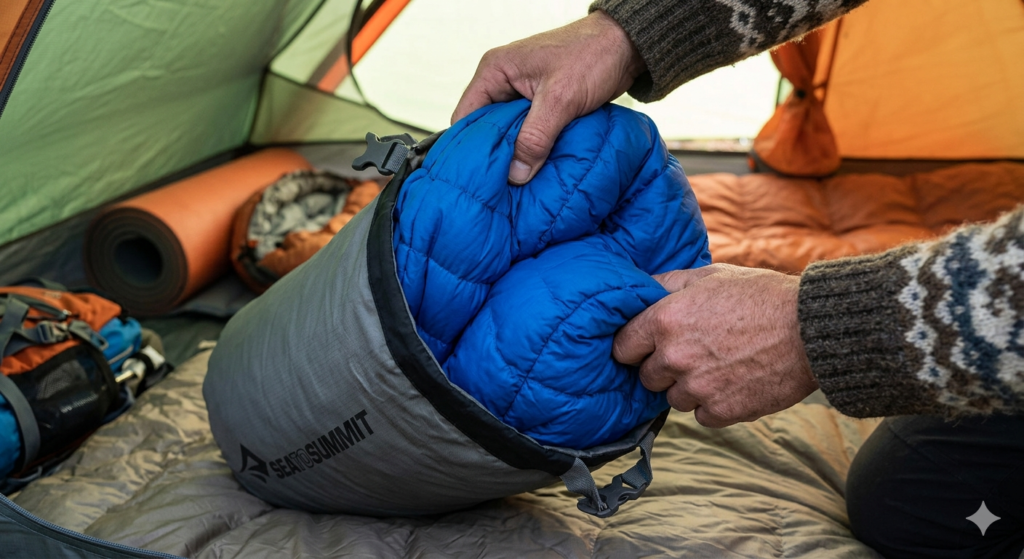
The most common and historically popular alternative is the stuff sack pillow. If you carry a dry bag to protect your sleeping quilt or spare clothing, you already have the outer shell of a pillow.
Simply take your empty stuff sack and fill it with your extra clothing at night. Your down jacket, spare socks, and rain gear can all be used to create volume.
- The Pro: It requires zero extra weight and uses gear you already have.
- The Con: If you are wearing all your clothes on a freezing night, you will have an empty pillow. Additionally, nylon stuff sacks can feel sticky against bare skin and make a crinkling sound when you shift.
To mitigate the discomfort of raw nylon, try flipping the stuff sack inside out to hide the slick weatherproofing, or drape your hiking shirt over it before resting your head.
The Buff Pillow Hack (The Softest Option)
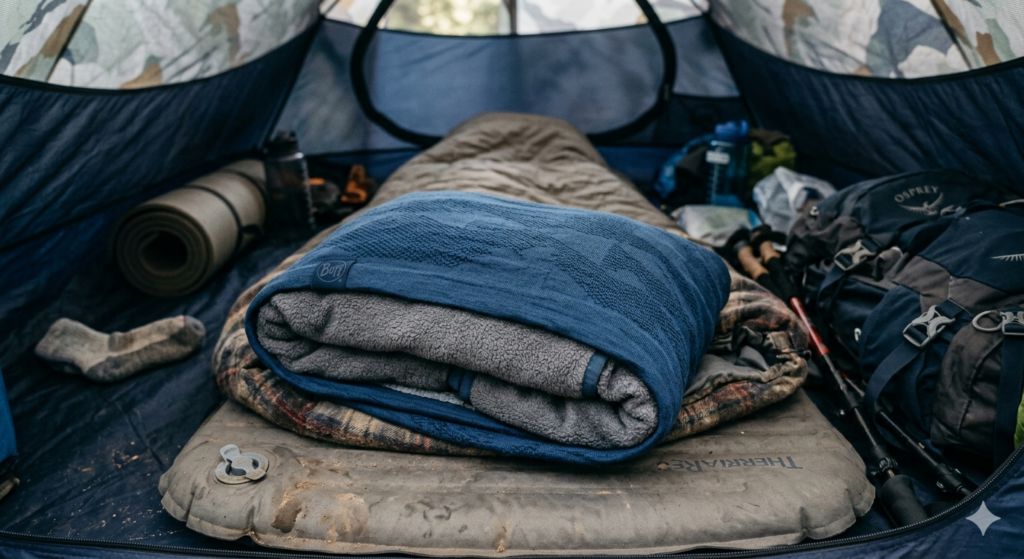
If you find the stuff sack method too abrasive, the buff pillow technique is a significant upgrade in comfort. A tubular cloth headpiece is already a staple in most ultralight kits for sun protection, sweat management, and warmth.
To create this pillow, fold your puffy jacket or spare fleece into a neat square. Then, slide your buff/neck gaiter over the folded jacket. The tubular shape holds the jacket securely together so it doesn’t unfold in the middle of the night.
Because a neck gaiter is usually made of soft merino wool or microfiber, it feels remarkably similar to a traditional cotton pillowcase. This method provides excellent softness against your face and keeps your makeshift pillow structurally intact until morning.
The Backpack Under the Pad
If you completely lack spare clothing to build volume, your backpack can serve as an emergency headrest. This technique works best if you use a foam sleeping pad or a frameless backpack.
Empty your backpack entirely and place the foam back panel of the pack directly underneath the head-end of your sleeping pad. This elevates the top of your sleeping pad by an inch or two, creating a gentle ramp that supports your neck.
While it does not provide the plush comfort of a stuffed jacket, it offers the necessary elevation to keep blood from rushing to your head, ensuring a surprisingly passable night of sleep.
Hybrid Solutions: The Best of Both Worlds
If you want the volume of an inflatable pillow without the weight of a dedicated commercial product, you can combine these hacks.
Blow a small amount of air into a lightweight waterproof dry bag (like your food bag or clothes bag) and seal it tightly. Then, wrap that inflated dry bag inside your fleece or neck gaiter. The trapped air provides excellent loft and neck support, while the outer fabric provides softness and muffles the crinkly sound of the plastic bag.
Conclusion
Finding the perfect sleep setup in the backcountry is a highly personal journey of trial and error. By utilizing ultralight pillow alternatives, you can save money, reduce your pack weight, and still wake up refreshed. Whether you rely on the classic stuff sack pillow or the exceptionally comfortable buff pillow trick, mastering these simple hacks proves that you do not need heavy gear to enjoy a comfortable night under the stars.
Frequently Asked Questions (FAQ)
1. Are DIY pillow hacks actually comfortable?
Yes, they can be incredibly comfortable, provided you have enough soft spare clothing (like a down jacket or fleece) to create adequate volume. A hard rain jacket stuffed into a sack will feel lumpy, but soft layers contour well to your head.
2. What if I have to wear all my spare clothes at night?
This is the main drawback of DIY pillows. If the temperature drops unexpectedly and you must wear your puffy jacket to sleep, you lose your pillow material. In these scenarios, using your backpack under your sleeping pad is the best backup plan.
3. How do I keep my camping pillow from sliding around?
Silicone-treated nylon sleeping pads are notoriously slippery. To keep your makeshift pillow in place, you can slip your sleeping pad through the armholes of your spare hiking shirt, creating a fabric “pocket” at the top of the pad to hold your pillow securely.
4. Do inflatable backpacking pillows pop easily?
Ultralight inflatable pillows (often weighing under 3 ounces) use very thin materials to save weight, making them susceptible to punctures from stray pine needles or zipper pulls. DIY fabric alternatives completely eliminate this risk.
5. How much weight can I save by ditching my camping pillow?
Traditional camping pillows often weigh between 6 and 12 ounces (170-340g). Even specialized ultralight inflatable pillows weigh 2 to 3 ounces (50-85g). Using a neck gaiter or stuff sack you already carry brings your pillow weight down to exactly zero.