For most backpackers, setting up a tent is the universal signal that the hiking day is over. It provides a familiar psychological barrier between the hiker and the wild environment. However, a growing number of ultralight enthusiasts and long-distance hikers are choosing to leave the tent packed away in their backpacks, opting instead for a much older, simpler tradition.
If you have ever scrolled through outdoor forums, you have likely seen hikers raving about the freedom of sleeping without a roof. But what exactly does this entail, and how do you do it without waking up covered in dew or mosquito bites? This guide breaks down the practice, the gear, and the skills needed for a successful night out in the open.
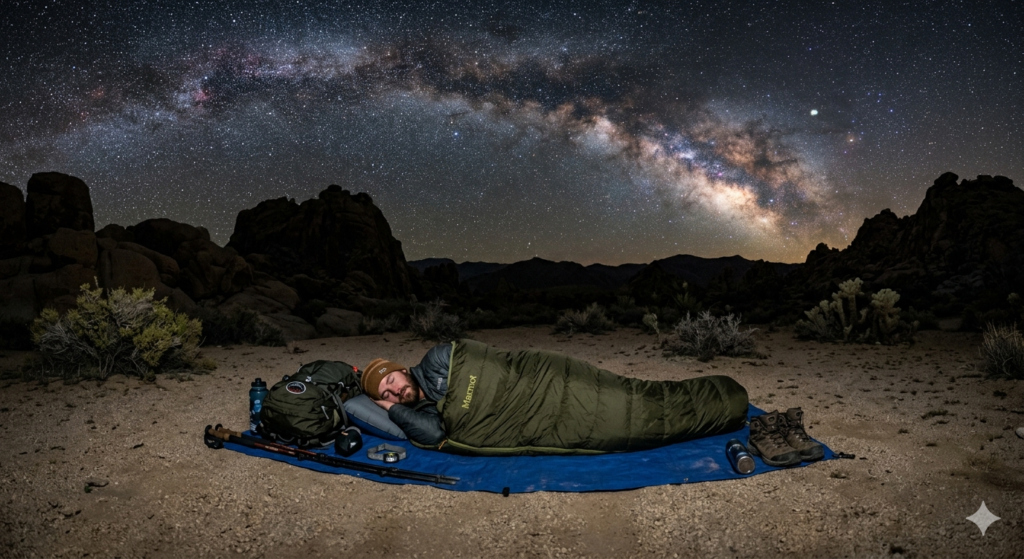
Understanding the Cowboy Camping Meaning
While the name evokes images of 19th-century ranchers on the frontier, the modern application is a highly calculated tactic used by endurance athletes and minimalists alike.
The cowboy camping meaning refers to the practice of sleeping outdoors in the backcountry without a tent, tarp, or any overhead shelter. Hikers simply lay their ground sheet, sleeping pad, and sleeping bag directly on the earth, embracing the elements and sleeping under the stars.
This method completely removes the visual and physical barriers between you and nature. It is the ultimate expression of simplicity on the trail, but it requires a solid understanding of weather patterns and local environments to execute comfortably.
Why Ultralight Hikers Love It
Choosing to sleep without a shelter is not just about the romantic notion of sleeping under stars; it offers several massive practical advantages for the ultralight backpacker.
1. Unmatched Efficiency
Setting up a tent takes time and energy. When cowboy camping, setting up camp takes less than two minutes: you simply unroll your pad and sleeping bag. In the morning, packing up is equally fast. This efficiency allows hikers to maximize their daylight hours for hiking.
2. Zero Condensation
As we discussed in previous guides regarding tent physics, human breath creates severe condensation inside enclosed shelters. When you sleep out in the open breeze, your exhalations are carried away instantly. Your sleeping bag remains perfectly dry from internal moisture.
3. Footprint Flexibility
Tents require a large, perfectly flat, and clear area to pitch. A cowboy camper only needs a space as wide and long as their sleeping pad. This opens up hundreds of tiny, stealthy campsite possibilities that traditional campers have to walk past.
Essential Gear for a Roofless Night
Even though you are leaving the tent packed away, you still need a dedicated system to protect you from the earth.
- The Ground Sheet: This is your primary defense against dirt, thorns, and moisture. A durable, lightweight Tyvek Ground Sheet is the industry standard. It prevents your expensive inflatable sleeping pad from being punctured by unseen rocks.
- The Sleep System: You will use your standard sleeping pad and quilt. Because there is no tent to trap ambient heat, ensure your sleeping bag is rated appropriately for the outside air temperature.
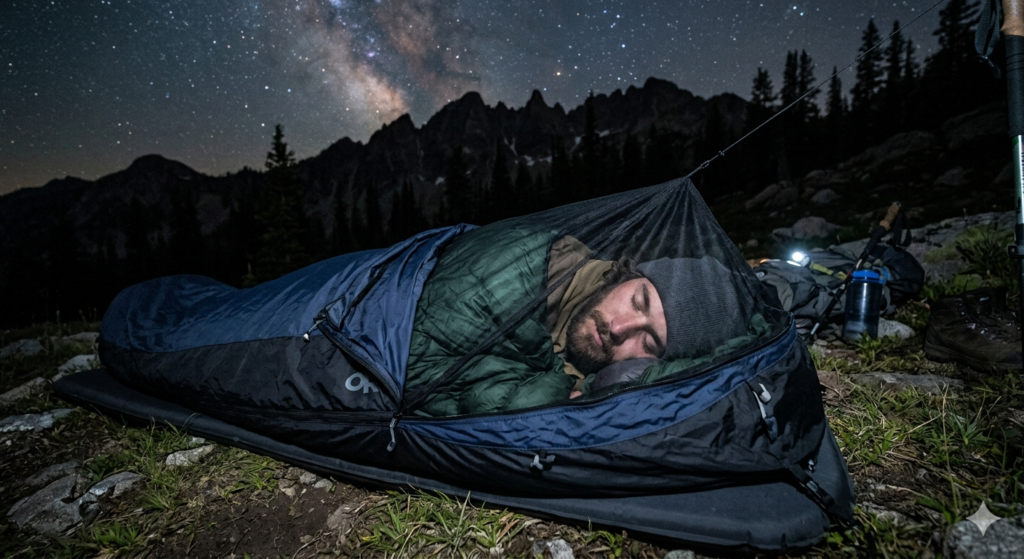
- Bivy Sack Camping (The Hybrid Approach): If the idea of insects crawling on you is too much, many hikers use an ultralight bivy sack. This is a highly breathable, water-resistant sleeve that goes over your sleeping bag. It features a mesh face panel to keep mosquitoes out while still providing the open-air experience.
Site Selection and Pest Avoidance
The success of your night depends entirely on where you throw down your ground sheet. When you remove the protection of a tent, your reliance on Essential Minimalist Camping Skills for Ultralighters becomes absolute.
Pest avoidance is the primary concern for beginners.
- Bugs: Avoid camping near standing water, marshlands, or tall grassy meadows where mosquitoes and ticks thrive.
- Critters: Check the immediate area for ant hills or rodent holes before laying down your pad. Mice are often attracted to heavily used, established campsites, so stealth camping in pristine areas usually results in fewer midnight visitors.
To avoid waking up soaking wet from morning dew, never cowboy camp in the bottom of a valley or in a wide-open meadow. Always try to sleep under the thick canopy of a large tree, which acts as a natural umbrella, blocking radiant heat loss and preventing dew from settling on your sleeping bag.
Conclusion
Cowboy camping is an acquired taste, but once mastered, it is deeply liberating. It teaches you to read the weather, understand microclimates, and trust your gear. By combining a durable ground sheet with smart site selection, you can safely strip away the final barrier between yourself and the wilderness, turning every clear night into an unforgettable backcountry experience.
Frequently Asked Questions (FAQ)
1. What do I do if it starts raining while cowboy camping?
You must always carry a shelter (like a tarp or a tent) even if you plan to cowboy camp. If you wake up to raindrops, you should have your shelter easily accessible near the top of your pack so you can pitch it in minutes.
2. Are snakes and spiders a danger when sleeping on the ground?
While the fear is common, incidents are incredibly rare. Snakes generally avoid humans and are inactive during the cool night hours. Checking your site before dark and avoiding rocky crevices is usually sufficient protection.
3. Do I need a headnet for cowboy camping?
Yes, during bug season. If you are not using a bivy sack, a simple 1-ounce mosquito headnet worn over a baseball cap will protect your face from mosquitoes and gnats while you sleep.
4. Why is my sleeping bag wet in the morning if it didn’t rain?
This is dew. If you sleep in an open field or a low valley on a clear, cool night, atmospheric moisture will condense directly onto your sleeping bag. Sleeping under trees or utilizing a water-resistant bivy sack helps prevent this.
5. Can I cowboy camp in the winter?
It is possible but requires expert-level gear and site selection. Winter air is incredibly dry, which prevents dew, but the extreme cold and potential for unexpected snowfall make tents or four-season bivy sacks a much safer choice.