Every ultralight hiker remembers the specific moment they decided to make a change. Usually, it occurs around mile eight of a steep ascent, shoulders screaming under the straps of a 45-pound pack, while a trail runner with a tiny vest breezes past effortlessly. The desire for that freedom is what drives hikers toward transitioning to ultralight.
However, a common misconception is that you must immediately drain your bank account to buy the lightest, most expensive gear on the market. In reality, lightening your load is a process of refinement, not just a shopping spree. It requires a shift in mindset, a critical look at your current inventory, and a willingness to learn new skills.
The Process Defined
Before you cut the handle off your toothbrush, it is vital to understand the methodology.
Transitioning to ultralight is a systematic process of auditing your current gear, removing non-essential items, and gradually replacing heavy "Big 3" items (shelter, backpack, sleep system) with lighter alternatives. It prioritizes skill acquisition over equipment density to safely reduce pack weight.
This guide outlines the practical steps to take you from a traditional heavy hauler to a streamlined, efficient hiker.
Step 1: The Gear Audit
You cannot reduce what you do not measure. The first step in reducing pack weight is to perform a ruthless audit of everything you currently own.
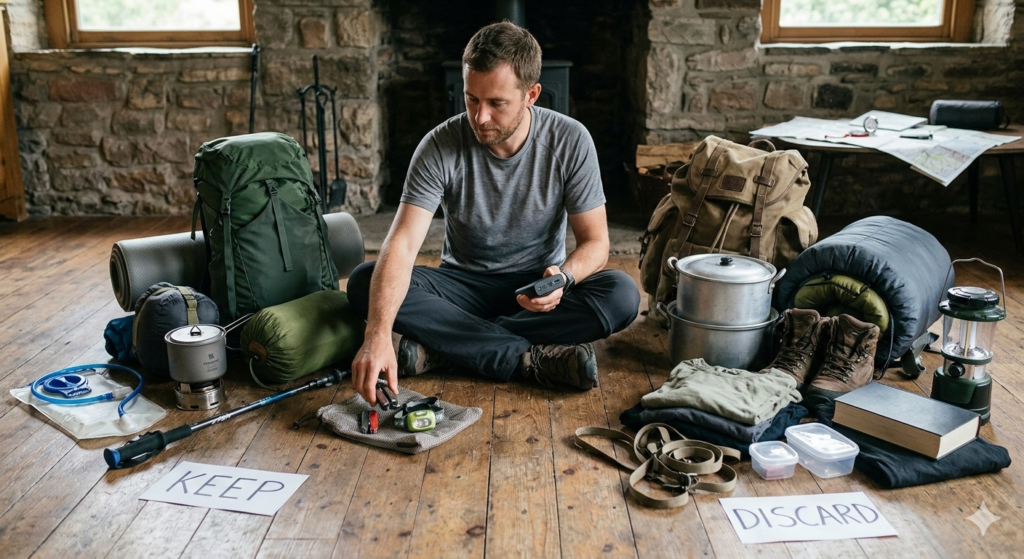
- Gather Everything: Pull every piece of hiking gear you own out of the closet.
- Weigh Everything: Use a digital kitchen scale to weigh every single item. Do not trust the weight listed on the box; they are rarely accurate.
- Categorize: Group items into categories (Shelter, Sleep, Kitchen, Clothing, Hygiene, Misc).
- Record: Enter this data into a spreadsheet or a tool like LighterPack.
This visual representation often reveals shocking truths—like realizing your "small" toiletry bag weighs two pounds. As you sort your equipment into "keep," "maybe," and "replace" piles, using clear Gear storage bins/organizers helps visualize the bulk you are trying to eliminate and keeps your staging area manageable.
Step 2: The "Shakedown" Hike
Once you have identified the heavy items, you need to test what you actually need. This is where the gear shaker hike comes in.
A shakedown hike is a short, low-risk trip—often just an overnight stay close to your car or home—designed to test your gear choices. On this trip, pay attention to every item you touch.
- Did you use that extra fleece?
- Did you need the camp chair?
- Did you use the backup batteries?
When you return, perform a post-trip audit. If you didn't use an item (excluding the First Aid Kit), it should be removed from your pack for the next trip. This is one of the most effective beginner ultralight tips: experience is the best filter for gear.
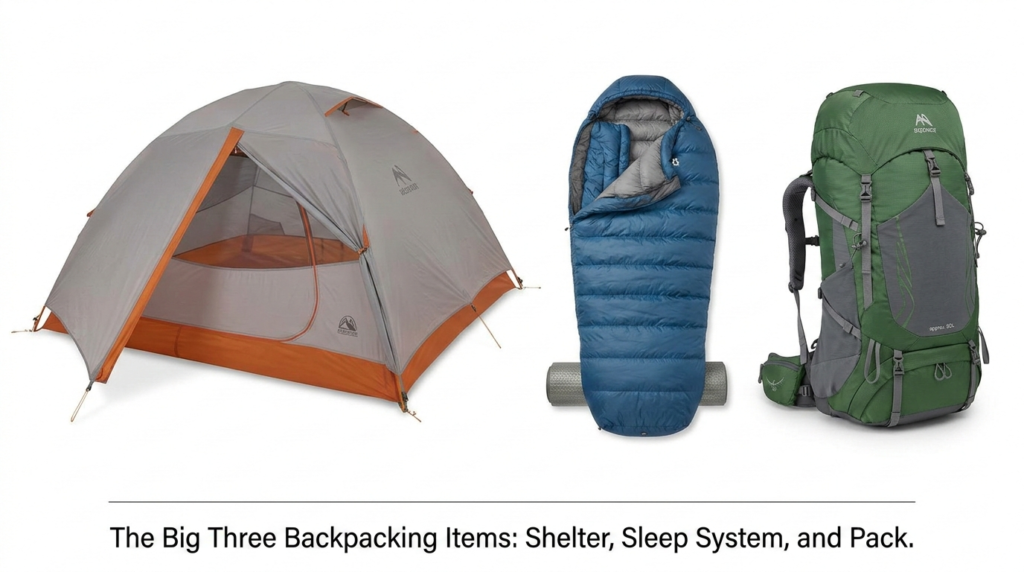
Step 3: Address the "Big 3" Last
New ultralighters often make the mistake of buying a lightweight frameless backpack first. This is a recipe for discomfort. You should upgrade your gear in a specific order:
- Shelter and Sleep System: Reduce the weight of your tent and sleeping bag first. These are usually the heaviest and bulkiest items.
- Clothing and Misc: Refine your clothing layers and kitchen kit.
- Backpack: Only after your total gear volume and weight have dropped should you buy an ultralight pack.
If you put 30 pounds of heavy traditional gear into a delicate 1-pound frameless pack, the pack will sag, dig into your shoulders, and potentially tear. As explained in our guide on [Internal Link: "What is Ultralight Backpacking? (And Why It Matters)"], the system must work holistically.
Step 4: Knowledge Weighs Nothing
The biggest weight savings come from replacing gear with skills. This is the core of the ultralight philosophy.
- Insulation: Instead of carrying a heavy 0°F bag for a 30°F night, learn to layer your clothing effectively to boost your sleep system's warmth.
- Site Selection: Instead of a heavy, freestanding dome tent, learn to pitch a tarp or trekking pole tent. This requires learning knots and how to read the wind direction, but it saves pounds of plastic and aluminum.
- Water: Instead of carrying 3 liters of water "just in case," learn to read a map and identify reliable water sources so you can carry less between fill-ups.
Step 5: Low-Hanging Fruit (Cheap Wins)
You don't need to spend money to start transitioning to ultralight. Here are three free or cheap ways to cut weight immediately:
- Repackage Consumables: Never take the full tube of toothpaste or the full bottle of sunscreen. Squeeze what you need into tiny droppers or ziplock bags.
- Ditch the Stuff Sacks: Sleeping bags and tents often come in heavy compression sacks. Try packing them loosely in your pack (using a pack liner) to fill the voids. It saves weight and often uses space more efficiently.
- Swap Water Bottles Replace heavy Nalgene bottles (6oz empty) with Smartwater or similar disposable bottles (1oz empty). They are durable, cheap, and thread onto most water filters.
Conclusion
Transitioning to ultralight is a journey of subtraction. It is about stripping away the fears and "what-ifs" that manifest as heavy gear, leaving only what is necessary to be safe and comfortable. Start with a gear audit, test your assumptions on a shakedown hike, and upgrade your Big 3 strategically. With every ounce you shed, the miles will become easier, and your connection to the trail will grow stronger.
## Frequently Asked Questions (FAQ)
Frequently Asked Questions (FAQ)
1. How fast should I transition to ultralight?
Take your time. Transitioning too quickly can be dangerous if you drop gear you don't have the skills to replace yet. Drop weight incrementally as your experience grows.
2. What is the most cost-effective gear to upgrade first?
Your shelter usually offers the best "dollar-per-ounce" savings. Moving from a 5lb tent to a 2lb trekking pole tent can save 3 pounds instantly. However, the cheapest way is to simply stop bringing items you don't use.
3. Is a gear audit really necessary?
Yes. Most hikers underestimate their base weight by 20-30%. Seeing the actual numbers in a spreadsheet is the psychological trigger needed to make real changes.
4. Can I go ultralight if I hike with a dog or kids?
Yes, but your base weight will inherently be higher because you are carrying supplies for others. The principles still apply: by lightening your personal gear, you make room for the extra food or safety items your dependents need.
5. What if I can't afford Dyneema (Cuben Fiber) gear?
You don't need it. Silnylon and polyester are slightly heavier but significantly cheaper and still much lighter than traditional canvas or heavy nylon. Many budget ultralight hikers achieve a sub-10lb base weight without spending premium prices.