Imagine covering a 40-mile trail loop that usually takes three days in a single weekend. You move lightly through the terrain, jogging the downhills and power-hiking the climbs, carrying only the bare essentials on your back. This is not just hiking, and it isn’t quite running—it is fastpacking.
As ultralight gear becomes more accessible, the line between trail running and backpacking has blurred. Fastpacking sits squarely in this intersection, appealing to endurance athletes who want to sleep under the stars and hikers who want to see more of the world in less time.
What is Fastpacking?
To understand this sub-niche, we must define the activity clearly.
Fastpacking is a hybrid outdoor activity that combines the speed and biomechanics of trail running with the self-sufficiency of ultralight backpacking. It involves carrying a minimalist kit (typically with a base weight under 8-10 lbs) to cover high mileage over multiple days, usually by running flat and downhill sections and hiking the ascents.
Unlike traditional backpacking, where the goal is often to camp in comfort, the goal of fastpacking is movement. The camp is simply a place to recover for the next day’s miles.
The Gear: Running Vest Packs vs. Backpacks
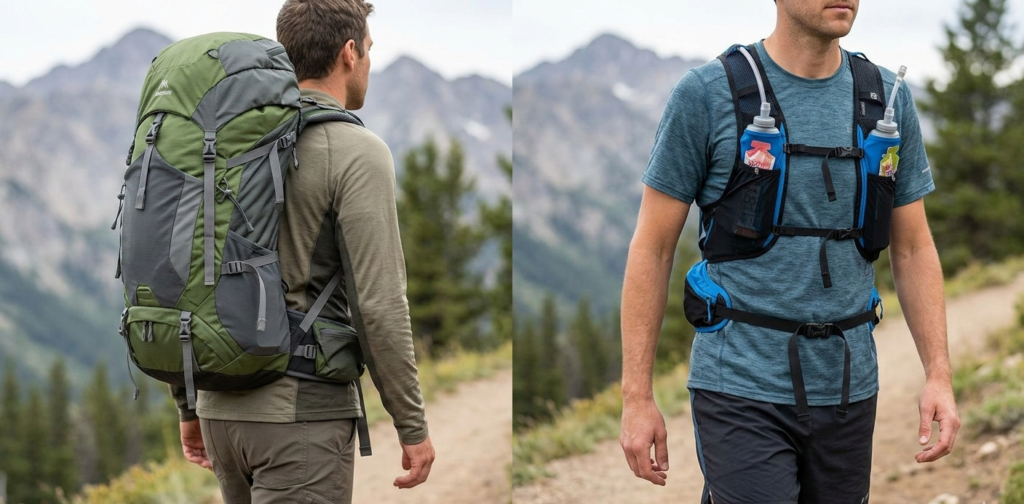
The most significant difference in gear between a hiker and a fastpacker is the pack itself. Standard backpacks are designed to carry weight on the hips. Running vest packs, however, are designed to ride high on the torso and hug the ribcage.
Because of the bouncing motion involved in running, a fastpack must fit like a garment. It utilizes wide shoulder straps with pockets for water bottles and snacks, keeping the weight distributed across the chest and upper back. This prevents the load from swaying and throwing off your center of gravity.
To fit into these 20-30 liter packs, your gear must be dialled in. As discussed in our guide on What is Ultralight Backpacking? (And Why It Matters), you must adopt a strict ultralight philosophy. Bulky sleeping bags and tents simply will not fit; high-fill power quilts and tiny tarps are the standard.
The Strategy: Power Hiking and Efficiency
A common misconception is that fastpackers run every step of the trail. In reality, endurance hiking is a game of energy management.
Most fastpackers adopt a strategy of “power hiking” the uphills—walking with a strong, purposeful stride, often using hands on knees for leverage—and jogging the flats and downhills. This approach keeps your heart rate manageable over 10 or 12 hours of movement.
Efficiency is key. Because you are moving faster, you generate more heat, meaning you need fewer insulation layers while moving. However, because you have less body fat and muscle mass to keep you warm when you stop, your transition from “run mode” to “camp mode” must be immediate to avoid hypothermia.
Managing the Physical Toll
High mileage hiking combined with the impact of running places unique stresses on the body. The most common enemy of the fastpacker is not exhaustion, but friction.
When you run with a pack for 30 miles, sweat and repetitive motion create the perfect storm for chafing. It can occur on your back, under your arms, or between your thighs. Experienced fastpackers apply anti-chafe balm (Body Glide) proactively before the hike begins and reapply it throughout the day. Ignoring a “hot spot” (the sensation of skin rubbing) can lead to raw, painful wounds that end a trip early.
Foot care is equally critical. Fastpackers almost exclusively use trail running shoes rather than boots. The shoes must be sized up to accommodate foot swelling, which is significant after 12 hours of pounding the trail.
Minimalism in Nutrition
Fueling a fastpacking trip is a logistical challenge. You burn significantly more calories than a walker, but you cannot carry unlimited food weight.
Fastpackers focus on minimalism and caloric density (aiming for 125+ calories per ounce). Meals are often simple and require no cooking to save the weight of a stove and fuel. This “stoveless” approach allows you to eat while moving or stop for very short breaks, maximizing your daylight hours for movement.
Conclusion
Fastpacking is the ultimate expression of the “light and fast” ethos. It opens up a new realm of possibilities, allowing you to explore vast wilderness areas in a fraction of the time required for traditional backpacking. While it requires a high level of fitness and a disciplined approach to gear weight, the feeling of flowing through the landscape with nothing but a vest on your back is an addictive experience for any outdoor athlete.
Frequently Asked Questions (FAQ)
1. Do I need to be an ultra-runner to fastpack?
No. While a base level of fitness is required, you do not need to be an elite athlete. Start with lower mileage days (15-20 miles) and focus on a “run/walk” strategy. The goal is enjoyment and coverage, not necessarily racing.
2. What kind of shelter do fastpackers use?
Fastpackers typically use the lightest options available: bivy sacks, minimal tarps, or pyramid shelters that use trekking poles for support. Some even use just a waterproof bivy bag if the weather forecast is clear.
3. Can I fastpack in hiking boots?
It is not recommended. Running in boots can lead to injury due to the weight and lack of flexibility. Trail running shoes offer the cushioning and agility needed for the running portions of the trip.
4. How heavy should my pack be?
Ideally, your base weight (gear only) should be under 10 lbs (4.5 kg). With food and water, your total pack weight should rarely exceed 15-18 lbs. If it is heavier, it will bounce uncomfortably while running.
5. Is fastpacking safe solo?
Solo fastpacking carries risks, primarily because you are traveling light with less emergency gear. Ensure you have a satellite communicator, tell someone your route, and have the skills to self-rescue or wait out a storm if necessary.