It is the one topic every new hiker thinks about but rarely wants to discuss: how to poop in woods. While we spend hours agonizing over the weight of our sleeping bags and the material of our tents, we often neglect the fundamental skills required for backcountry sanitation.
Doing this incorrectly is not just an aesthetic issue; it is a severe environmental and public health hazard. Improperly managed human waste pollutes vital water sources, spreads pathogens like Giardia, and creates a miserable experience for the next hiker. This guide covers the essential techniques for a proper leave no trace bathroom experience.
What is a Cat Hole?
Before diving into the logistics, we must define the core mechanism of backcountry waste disposal.
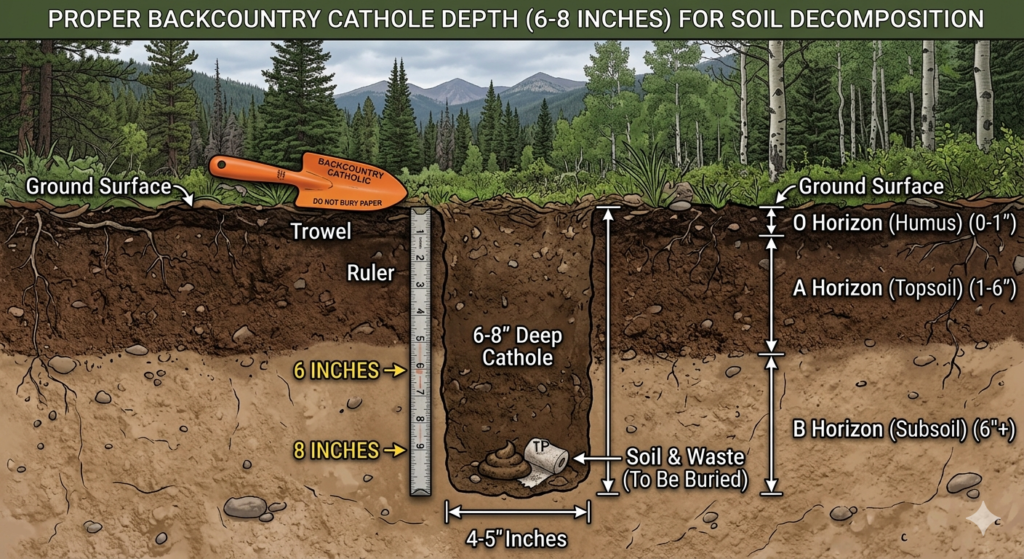
A cat hole is a small, shallow pit dug in the soil used to bury human waste in the backcountry. Proper cat hole digging requires a depth of six to eight inches to ensure waste decomposes safely without contaminating local water sources or exposing it to animals.
This depth is highly specific for a reason. The top six to eight inches of soil contains the highest concentration of organic decomposers (bacteria and insects). If you dig too shallow, animals will dig it up. If you dig too deep, the waste will not decompose efficiently.
Site Selection: Where to Dig
Just as we discussed the importance of location in our Essential Minimalist Camping Skills for Ultralighters guide, picking the right spot for your bathroom is critical. You cannot simply step off the trail and start digging.
The golden rule of a leave no trace bathroom is the 200-foot rule. You must be at least 200 feet (about 70 large adult paces) away from any water source, trail, or campsite. This prevents pathogens from washing into streams during a rainstorm.
Furthermore, look for the right soil. Dark, rich soil with high organic matter will decompose waste much faster than sandy or rocky soil. Whenever possible, choose a site that receives direct sunlight, as the heat accelerates the decomposition process.
The Cat Hole Digging Guide (Step-by-Step)
Executing this process smoothly requires a bit of preparation. Always assemble your “bathroom kit” (trowel, toilet paper, and hand sanitizer) before you start searching for a spot.
- Clear the Surface: Use your foot to sweep away loose leaves and pine needles, setting them aside. You will need these later to disguise the hole.
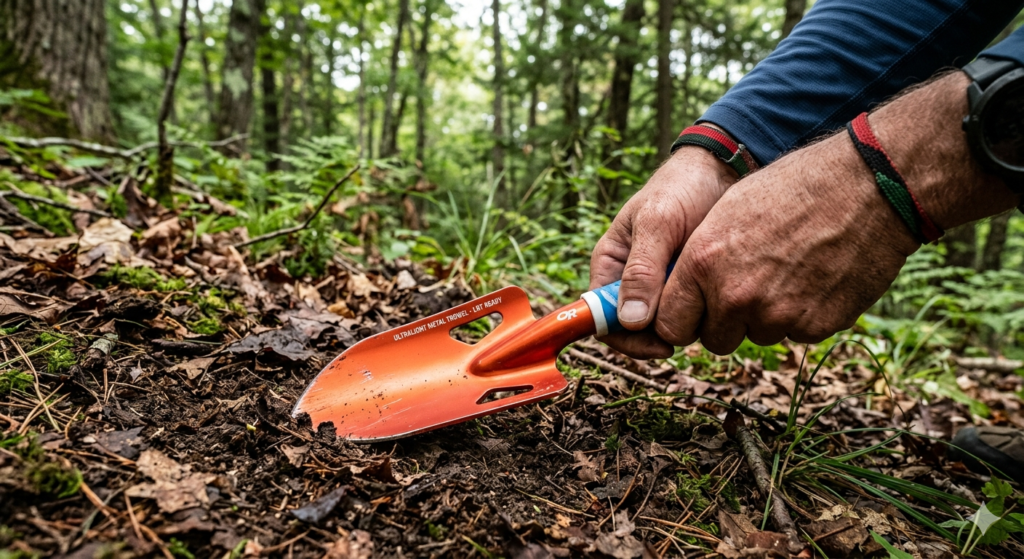
- Dig the Pit: Use a dedicated tool for trowel use. Trying to dig a six-inch hole with a boot heel or a stick is nearly impossible in root-filled forest soil. A sharp, minimalist tool like UL Trowel easily slices through roots and hard dirt without adding significant weight to your pack.
- Do Your Business: Squat low over the hole. Many hikers hold onto a small tree trunk or a sturdy branch for balance.
- Fill and Disguise: Once finished, use your trowel to push the original dirt back into the hole, packing it down firmly. Finally, scatter the leaves and pine needles you saved in step one over the top so the area looks completely undisturbed.
Handling Toilet Paper and Hygiene
The most debated topic in backpacking hygiene is what to do with toilet paper. While some older guidelines suggested burying it, modern Leave No Trace ethics strongly recommend packing it out.
Toilet paper can take months to decompose, and animals frequently dig it up, leaving “white blooms” of used paper scattered around popular campsites. Bring a dedicated ziplock bag (often covered in duct tape so you don’t have to look at the contents) specifically for packing out used toilet paper and wet wipes.
After you have buried your waste and packed away your paper, rigorous hand sanitization is mandatory. Apply a generous amount of alcohol-based hand sanitizer to thoroughly clean your hands before touching your backpack, water bottles, or food.
Conclusion
Understanding how to properly dig a cat hole is a non-negotiable skill for anyone spending time in the wilderness. By following this cat hole digging guide, respecting the 200-foot distance rule, and packing out your toilet paper, you take direct responsibility for the health of the environment. Mastering backpacking hygiene ensures that the trails remain pristine and safe for wildlife and future hikers alike.
Frequently Asked Questions (FAQ)
1. Do I really need to carry a trowel?
Yes. Digging 6 to 8 inches into compacted forest soil or root-heavy terrain is extremely difficult without a proper digging tool. Using rocks or sticks usually results in shallow holes that animals easily uncover.
2. Can I just put a large rock over my waste instead of digging?
No. This is colloquially known as a “smear” and is terrible for the environment. Without the microbes found deep in the soil, the waste will not decompose efficiently, and the rock does not prevent pathogens from washing into water sources.
3. What do I do if the ground is frozen or entirely solid rock?
In environments where digging is impossible (like high alpine granite, winter environments, or narrow desert canyons), you must use a WAG bag (Waste Alleviation and Gelling bag) to pack your human waste out with you.
4. How do I stop my toilet paper trash bag from smelling?
Double-bagging your used toilet paper is highly effective. You can also crush an aspirin or put a dry tea bag inside the waste ziplock to help neutralize odors. Keeping the bag opaque (using duct tape) helps mentally separate it from your other gear.
5. Can I bury biodegradable wet wipes?
No. Even wipes marketed as “biodegradable” or “flushable” take years to break down in backcountry soil because they contain synthetic fibers. All wet wipes must be packed out in your trash bag.