Water is simultaneously the most critical resource for human survival and the heaviest consumable item you will carry on the trail. Because a single liter of water weighs roughly 2.2 pounds, carrying a multi-day supply from the trailhead is physically impossible for a long-distance hiker. Therefore, treating water found in the wild is a mandatory backcountry skill.
Navigating the technical landscape of water filtration backpacking often forces hikers to choose between two dominant hydration methodologies: the active squeeze system and the passive gravity system. This guide breaks down the physics, efficiency, and maintenance requirements of both approaches to help you build a reliable hydration strategy.
What is Backpacking Water Filtration?
Before comparing specific setups, we must define the core mechanism keeping you safe from waterborne illness.
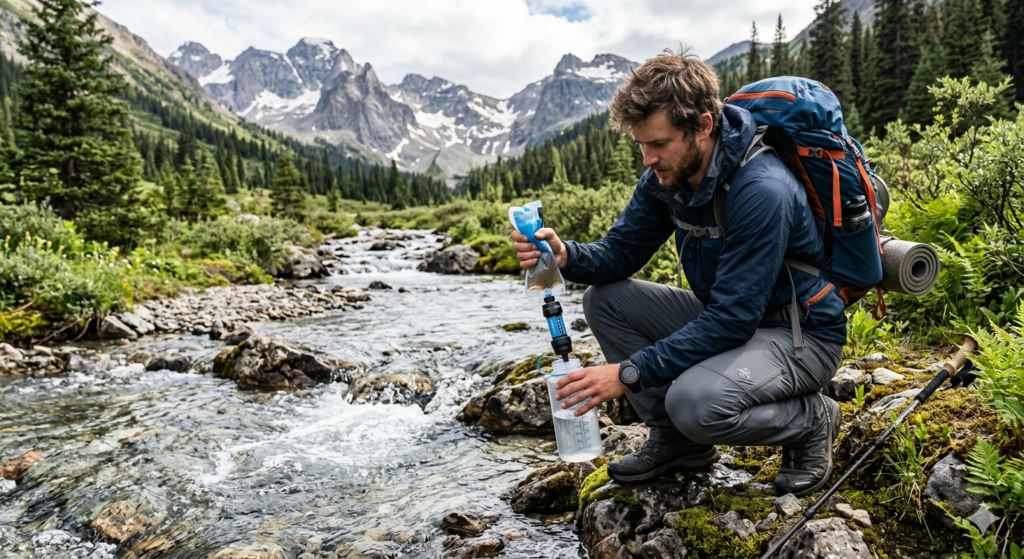
Water filtration backpacking is the process of safely removing harmful bacteria, protozoa, and particulates from wild water sources using portable mechanical filters or chemical treatments. This allows hikers to safely hydrate without carrying multiple days’ worth of heavy water weight in their backpacks.
Modern mechanical filters use bundles of microscopic hollow fiber tubes. As water is pushed or pulled through these tubes, the microscopic pores allow water molecules to pass while trapping pathogens like Giardia and Cryptosporidium.
Squeeze Filters: The Ultralight Standard
The “squeeze” methodology is currently the most popular system among ultralight and thru-hikers due to its unparalleled low weight and versatility.
In this system, a hiker collects “dirty” water into a soft, flexible bladder or a standard plastic water bottle. The filter is screwed directly onto the threads of the dirty container. The hiker then uses physical force to squeeze the dirty container, pushing water through the filter and directly into their mouth or into a clean storage bottle.
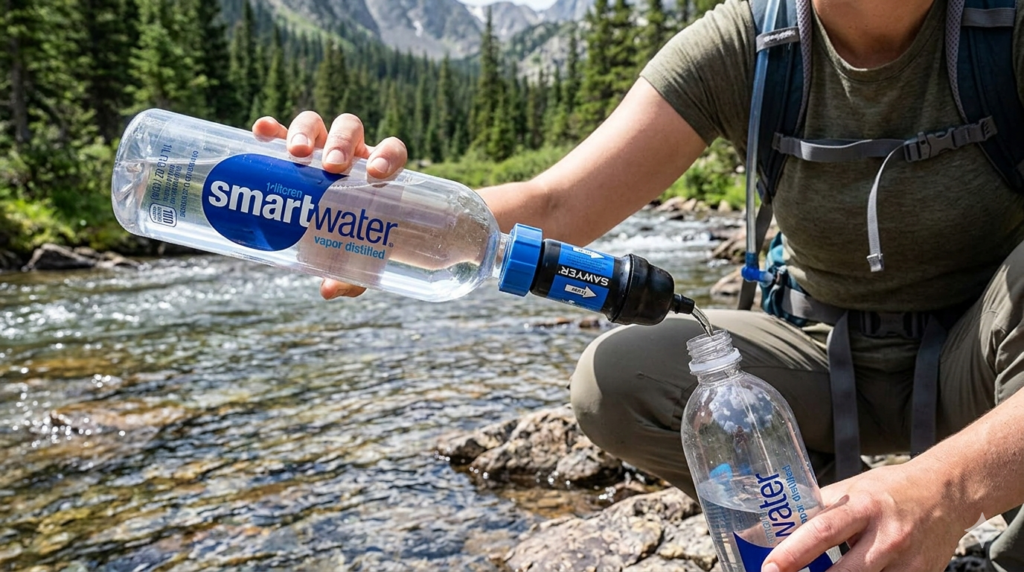
The industry standard for this method is the Sawyer Squeeze. Weighing just 3 ounces, it threads perfectly onto disposable Smartwater bottles. To make this process seamless, many hikers use a smartwater coupling—a small, double-threaded plastic tube. This coupling securely connects the filter outlet to a clean bottle, preventing any spillage or cross-contamination while you squeeze.
Gravity Filters: The High-Volume Solution
While squeeze filters are light, they require continuous manual labor. If your hands are frozen or you are treating water for multiple people, squeezing rigid plastic bottles becomes an exhausting chore.
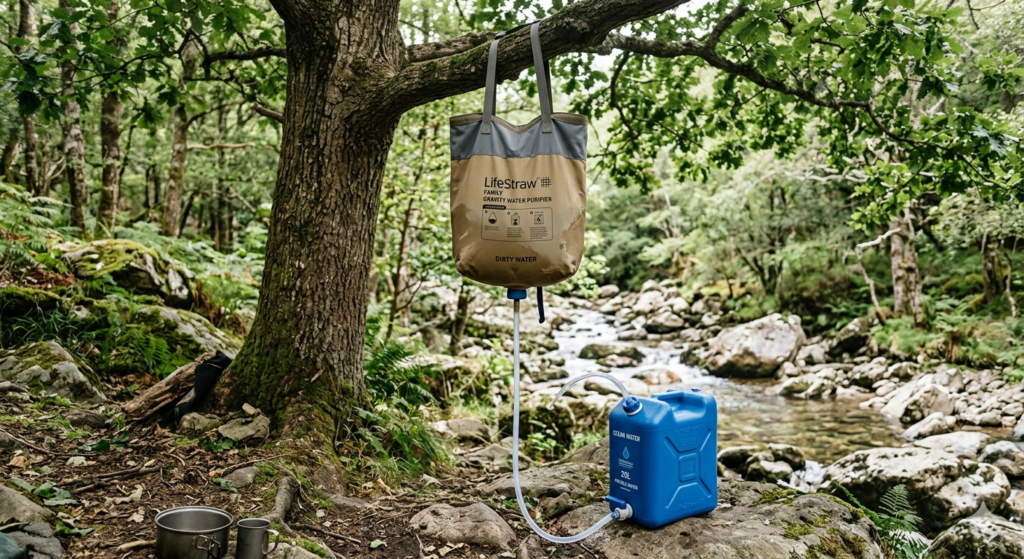
Gravity systems eliminate the physical labor by utilizing physics. The hiker fills a large “dirty” water bag (typically 2 to 4 liters) and hangs it from a tree branch. A silicone hose connects the bottom of the dirty bag to the mechanical filter. A second hose runs from the filter down to a clean water receptacle resting on the ground.
Once the system is hung, gravity forces the water through the filter at a steady rate. This is exceptionally efficient for camp chores, allowing you to set up your tent or cook dinner while the water filters itself. However, the extra hoses, large bags, and hanging straps add noticeable weight and bulk to your backpack.
Maintaining Flow: Sawyer Squeeze Cleaning
The primary drawback of hollow fiber filters is that they inevitably clog. As they trap microscopic silt and algae, the pores block up, severely reducing the flow rate.
Proper sawyer squeeze cleaning is mandatory to keep the system functional. This process is called “backflushing.” You must force clean water backward through the filter to dislodge the trapped dirt out the intake end. You can do this in the field using the large plastic syringe provided by the manufacturer, or by forcefully squeezing clean water from a Smartwater bottle equipped with a sports cap directly into the clean end of the filter.
Failing to backflush your filter every few days will reduce the flow to a frustrating trickle, turning a fast water stop into a twenty-minute ordeal.
Managing Carry Capacity and Backups
Your filtration system directly impacts your daily hiking efficiency. As detailed in our Ultralight Nutrition & Stoveless Cooking Guide, reducing consumable weight is critical.
Understanding your water carry capacity dictates how many water bottles you need to bring. You should look at a map to determine the distance to the next reliable water source. If the next stream is only 5 miles away, you only need to filter and carry 1 liter. Do not filter and carry 3 liters of water “just in case,” as you are unnecessarily hauling over 4 extra pounds of weight.
Finally, mechanical filters have one fatal flaw: if the water inside the hollow fibers freezes, the expanding ice shatters the microscopic tubes, rendering the filter completely useless. If you suspect freezing temperatures, you must sleep with your filter inside your sleeping bag. Alternatively, carry a lightweight chemical treatment (like chlorine dioxide drops or Aquamira tablets) as a fail-safe backup to ensure you always have access to safe drinking water.
Conclusion
Choosing the right approach to water filtration backpacking comes down to balancing weight against convenience. Squeeze systems offer the lightest, most agile setup for solo hikers willing to perform manual labor and strictly manage their sawyer squeeze cleaning routine. Gravity systems provide a luxurious, hands-free experience ideal for camp settings and group hikes. By pairing your mechanical filter with a reliable chemical treatment backup and actively managing your water carry capacity, you ensure safe and efficient hydration on any trail.
Frequently Asked Questions (FAQ)
1. Do backpacking filters remove viruses?
Standard hollow fiber mechanical filters (like the Sawyer Squeeze or Katadyn BeFree) remove bacteria and protozoa, but their pores are not small enough to remove viruses. In North America and Western Europe, backcountry viruses are extremely rare. If traveling in developing nations, you must use a purifier or a chemical treatment to neutralize viruses.
2. How long do mechanical water filters last?
Under ideal conditions, hollow fiber filters can treat thousands of gallons of water, essentially lasting a lifetime. However, their lifespan is severely shortened by filtering highly turbid (muddy) water without backflushing, or by allowing the filter to freeze.
3. Is it safe to drink water directly from a mountain spring without filtering?
It is never recommended. Even pristine-looking alpine water can contain animal feces carrying Giardia or Cryptosporidium upstream from your collection point. Always filter or treat wild water.
4. How long does chemical treatment take to work?
Chemical treatments (like iodine or chlorine dioxide) are not instantaneous. They typically require between 15 and 30 minutes to neutralize bacteria and protozoa, and up to 4 hours in very cold water to neutralize Cryptosporidium.
5. What should I do if the water source is full of floating debris and mud?
Use a pre-filter. Secure a bandana or a coffee filter over the opening of your dirty water container before submerging it. This blocks large leaves, insects, and thick mud from entering your bottle, preventing your mechanical filter from clogging prematurely.