One of the most persistent challenges for long-distance hikers is managing the physical weight of their food. You can spend hundreds of dollars shaving ounces off your tent and sleeping bag, only to ruin that progress by packing five pounds of heavy, water-logged meals. To truly lighten your load, you must view food mathematically as fuel. Mastering calorie density backpacking is the most effective way to sustain high energy levels without overburdening your joints.
When you transition from casual weekend trips to high-mileage thru-hiking, you cannot rely on traditional camping food. This guide explores how to calculate the energy-to-weight ratio of your meals, prioritize the right macronutrients, and optimize your food bag for maximum efficiency.
What is Caloric Density in Backpacking?
Before you start analyzing nutrition labels at the grocery store, it is vital to understand the foundational metric used by thru-hikers.
Calorie density backpacking is the strategic practice of selecting food based entirely on its energy-to-weight ratio to minimize pack weight. By prioritizing foods rich in healthy fats that provide high energy yields, hikers can sustain extreme daily physical exertion without carrying a debilitating food load.
Understanding this ratio completely changes how you pack. For example, a heavy, fresh apple might weigh 6 ounces but only provide 90 calories. In contrast, 6 ounces of macadamia nuts provides over 1,200 calories.
The Golden Rule: 100 Calories Per Ounce
When conducting your ultralight meal planning, you need a baseline benchmark to evaluate whether a food item is worth carrying. The universally accepted standard among long-distance hikers is the 100 calories per ounce rule.
If a food item offers less than 100 calories per ounce, it is generally considered too heavy for the energy it provides. Foods that meet or exceed this metric are efficient enough to earn a spot in your pack. As we emphasized in our foundational Ultralight Nutrition & Stoveless Cooking Guide, rigorously auditing your food bag using this metric is the key to preventing a bloated, heavy backpack.
To calculate this, simply look at the nutrition label. Divide the total calories per serving by the weight of the serving in ounces. If the result is 100 or higher, it is a highly efficient trail food.
Fats vs. Carbohydrates: The Nutritional Math
To achieve maximum efficiency, you must understand how different macronutrients provide energy. The laws of chemistry dictate that fats are the most weight-efficient energy source available.
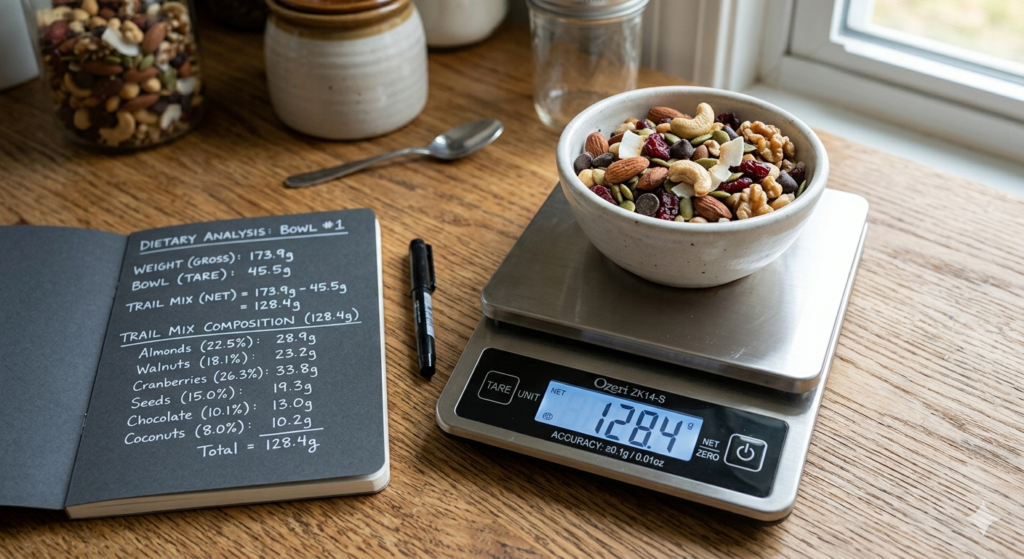
- Carbohydrates and Proteins: These yield roughly 4 calories per gram (about 113 calories per ounce).
- Fats: These yield roughly 9 calories per gram (about 255 calories per ounce).
This means that carrying pure fat provides more than double the energy of carrying pure carbohydrates for the exact same weight. While you absolutely need carbohydrates for quick, explosive energy on steep climbs, fats provide the slow-burning, long-term endurance required to hike all day. Structuring your diet to heavily favor fats is the secret to a featherweight food bag.
Top High-Density Backpacking Snacks
Snacking continuously throughout the day—often called “grazing”—is the most common way thru-hikers fuel their bodies. Selecting the right backpacking snacks is crucial.
Here are some of the most efficient, high-density options available:
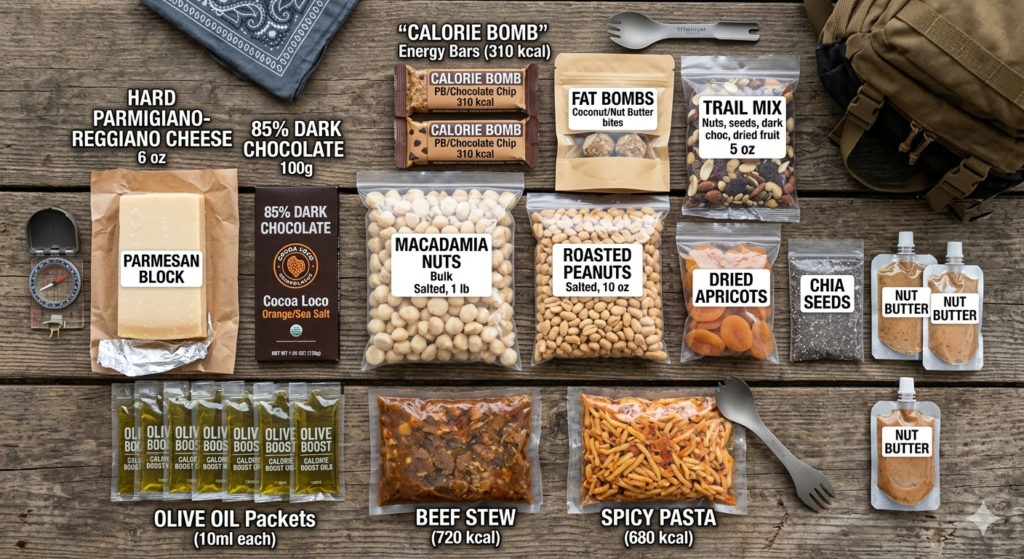
- Macadamia Nuts and Pecans: Weighing in at over 200 calories per ounce, these are the undisputed kings of trail nuts.
- Nut Butters: Peanut, almond, and cashew butters offer excellent fats and proteins.
- Dark Chocolate: Look for chocolate with a high cacao percentage (70% or more) to maximize fat content and minimize sugar.
- Hard Cheeses: Aged cheddar, parmesan, and gouda travel incredibly well without refrigeration and provide dense fats and proteins.
Repackaging and Carrying Liquid Fats
The ultimate way to boost the caloric density of any meal is to pour pure fat over it. Adding a tablespoon of olive oil to your dehydrated dinner instantly adds roughly 120 calories without noticeably altering the volume of your meal.
Many hikers rely on individual olive oil packets acquired from restaurants or specialty online retailers. However, carrying dozens of small plastic packets creates a significant amount of trash. A more environmentally friendly and cost-effective approach is pouring bulk oil or nut butter into lightweight, refillable squeeze tubes (for oil/pb) before you leave home. This allows you to securely carry pure, calorie-dense fats and squirt precise amounts onto your meals without making a mess in your pack.
Conclusion
Carrying 15 pounds of food does not mean you have to endure a miserable hike, provided those 15 pounds are packed with raw energy. By applying the principles of calorie density backpacking, you ensure that every single ounce in your pack actively serves your physical needs. Prioritizing foods that exceed the 100-calorie-per-ounce benchmark, embracing healthy fats, and repackaging your liquids turns a heavy food bag into a highly efficient, high-octane fuel system for your body.
Frequently Asked Questions (FAQ)
1. Can I survive on just fats while backpacking?
No. While fats are weight-efficient, your body requires carbohydrates to quickly replenish muscle glycogen during high-intensity cardiovascular exertion (like climbing steep hills). A healthy trail diet requires a balance of carbohydrates for quick energy and fats for long-term endurance.
2. Are freeze-dried meals calorie-dense?
Many commercial freeze-dried meals are surprisingly poor in caloric density. While they are lightweight, a standard meal might only provide 400 calories for 5 ounces of weight (80 calories per ounce). Always check the label, and consider adding olive oil or cheese to boost their efficiency.
3. What is the single highest calorie food for backpacking?
Pure oils (like olive oil, coconut oil, or avocado oil) are the highest, offering roughly 250 calories per ounce. Among solid foods, macadamia nuts and pecans are the highest, typically ranging from 200 to 210 calories per ounce.
4. How do I prevent hard cheese from spoiling on the trail?
Hard, aged cheeses (like sharp cheddar or parmesan) contain very little moisture, which makes them highly resistant to bacteria. They will often “sweat” oil in warm weather, but they rarely spoil quickly. Keep them wrapped in a paper towel inside a ziplock bag to absorb excess oil.
5. How many calories do I actually burn while backpacking?
A typical backpacker carrying a load over mountainous terrain can easily burn between 3,500 and 5,000 calories per day, depending on their body weight, pack weight, and total mileage. This is why maximizing your calories per ounce is so critical to preventing severe weight loss.