At the end of a grueling, 20-mile hiking day, the last thing many hikers want to do is set up a kitchen. Fumbling with a fuel canister, waiting for water to boil, and scrubbing a sticky metal pot in the dark can feel like a chore that stands between you and your sleeping bag. This frustration is exactly what drives backpackers to reconsider their relationship with trail food.
Going stoveless is one of the most polarizing, yet highly effective, weight-saving strategies in the outdoor community. By adopting this minimalist approach, you eliminate heavy metal gear, save time, and simplify your camp routine. This stoveless backpacking guide will teach you the mechanics of cold soaking, how to choose the right container, and which foods actually taste good without a flame.
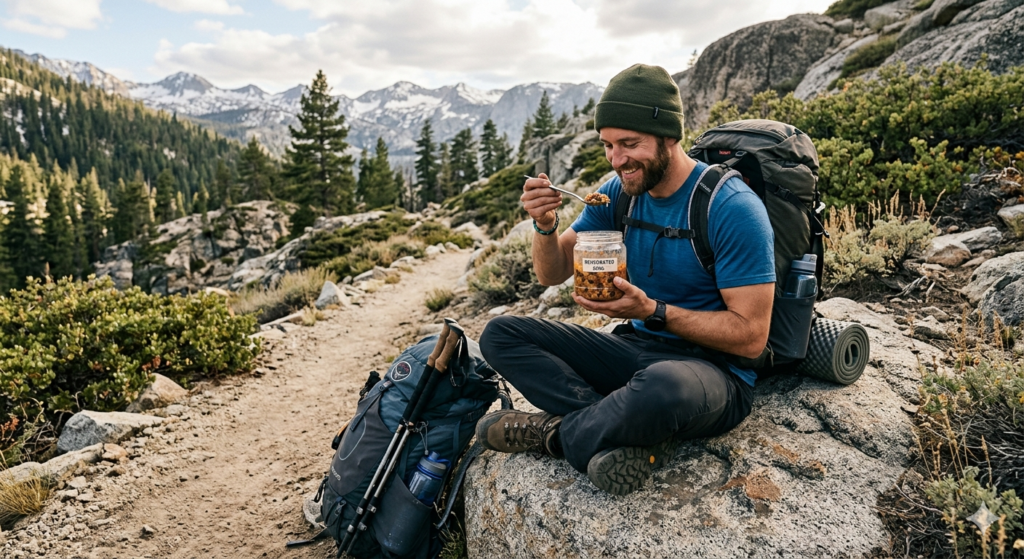
What is Cold Soaking?
To master this eating style, you must understand the basic mechanism of rehydration.
Cold soaking is a stoveless backpacking technique where hikers rehydrate dehydrated or pre-cooked food using ambient-temperature water. By placing dry meals into a sealed jar with water while hiking, the food softens over a few hours, completely eliminating the need to carry a camp stove and fuel.
This method relies on time rather than temperature. Given enough hours, water will naturally break down and soften pre-cooked, dehydrated starches just as effectively as boiling water does in five minutes.
The Benefits of No Cook Backpacking
Leaving your stove behind offers massive logistical advantages that extend far beyond simply having a lighter backpack.
First and foremost is the incredible weight and fuel savings. A standard camp stove, a titanium pot, a lid, and a full canister of isobutane gas can easily weigh over a pound (16+ ounces). By leaving these items at home, you instantly shed significant weight. As we discussed in our Ultralight Nutrition & Stoveless Cooking Guide, reducing your kitchen weight is a primary goal for long-distance hikers.
Furthermore, no cook backpacking offers unmatched efficiency. You do not have to stop and cook; you simply add water to your jar an hour before you plan to eat. When you reach camp, your dinner is already waiting for you. It also removes the fire hazard, making it a highly responsible choice during dry, high-wildfire-risk summer months.
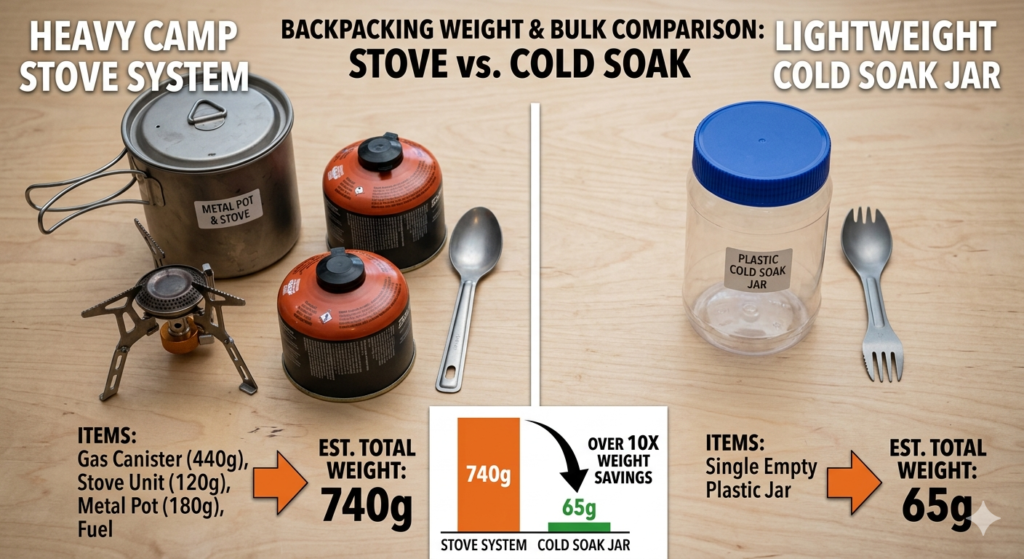
Choosing the Right Cold Soak Jars
The success of your stoveless journey depends entirely on the vessel you use. You need a container that is lightweight, durable, and absolutely watertight.
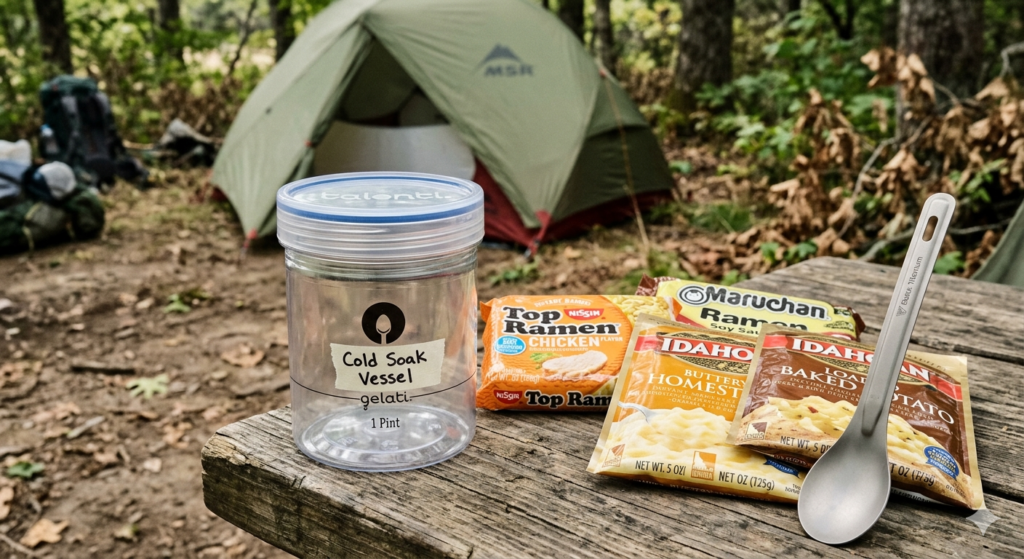
The undisputed champion of cold soak jars in the hiking community is a repurposed gelato container. Purchasing a talenti jar (or specifically designed jar) provides you with a robust, wide-mouth plastic container featuring a secure screw-top lid. It weighs under two ounces and fits perfectly into the side water bottle pockets of most ultralight backpacks.
Alternative containers include empty peanut butter jars or specialized, lightweight screw-top food containers from brands like Nalgene or Ziploc. The key feature is the screw-top lid; snap-on lids will inevitably pop off under the pressure of hiking, spilling liquid food inside your backpack.
The Best Talenti Jar Recipes
The hardest part of going stoveless is adjusting your palate. Not all foods rehydrate well in cold water. Raw grains (like traditional rice or pasta) and freeze-dried chunks of meat will remain hard and rubbery.
You must focus on pre-cooked, dehydrated bases. Here are a few reliable talenti jar recipes that hikers rely on:
- Spicy Peanut Ramen: Crush a packet of instant ramen noodles into your jar. Add a spoonful of peanut butter powder, a dash of soy sauce (from a packet), and red pepper flakes. Add cold water and soak for 30 minutes.
- The Couscous Salad: Couscous is pre-steamed wheat and rehydrates perfectly in cold water in about 15 minutes. Add dehydrated vegetables, a packet of olive oil, and some crushed nuts for a high-calorie dinner.
- The “Bomb” (Instant Potatoes): Instant mashed potatoes rehydrate instantly in cold water. Mix them with bacon bits, hard cheese, and olive oil for a dense, savory, immediately ready meal.
Process & Timeline: How to Cold Soak
Timing is everything when relying on this method. You do not wait until you arrive at camp to start your dinner.
Roughly one to two hours before you plan to stop for the night, pull out your jar. Add your dry ingredients and pour in the appropriate amount of filtered water. Stir vigorously, screw the lid on tightly, and slide the jar into the exterior mesh pocket of your backpack.
As you hike the final miles of the day, the rhythmic bouncing of your backpack will naturally agitate and mix the food. By the time you drop your pack at your campsite, your meal is fully soft, perfectly mixed, and ready to consume immediately.
Conclusion
Transitioning to a cold diet requires a mental shift, but the physical rewards are undeniable. This stoveless backpacking guide highlights how simple it is to ditch the heavy metal cookware in favor of a cheap, lightweight plastic jar. By mastering a few high-calorie talenti jar recipes and understanding the timing of rehydration, you can enjoy the ultimate no cook backpacking experience, saving weight, fuel, and time on your next adventure.
Frequently Asked Questions (FAQ)
1. Is it safe to eat cold-soaked food?
Yes, as long as you are using foods that are already pre-cooked or safe to eat raw (like instant rice, couscous, rolled oats, and instant potatoes). You should never cold soak raw beans, raw pasta, or raw meats.
2. Can I cold soak commercial freeze-dried meals like Mountain House?
Technically yes, but it is not recommended. Commercial freeze-dried meals are designed for boiling water. If you soak them in cold water, the starches will eventually soften (after 2-3 hours), but the freeze-dried meat often remains chewy, rubbery, and unappetizing.
3. How do I clean my cold soak jar without hot water?
Add a small splash of filtered water to the empty jar, seal the lid, and shake it vigorously to loosen the remaining food particles. Drink the “rinse water” so you consume all the calories and leave no trace, then wipe the inside clean with a dedicated bandana or a tiny drop of biodegradable soap (used 200 feet from a water source).
4. How long does it take for food to rehydrate?
It varies by food type. Instant mashed potatoes hydrate immediately (1 minute). Couscous takes about 10-15 minutes. Ramen noodles take roughly 30 minutes. Dehydrated refried beans or instant rice can take 60 to 90 minutes.
5. Do I still need to carry a bear canister if I go stoveless?
Yes. Cold soaking does not eliminate food odors. You still need to store your food, your cold soak jar, and all your wrappers in an odor-proof bag and a bear canister (or execute a proper bear hang) according to local wilderness regulations.