You have successfully replaced your heavy tent with a tarp, swapped your boots for trail runners, and upgraded to a frameless backpack. Yet, when you pick up your fully loaded pack, it still feels oppressively heavy. For many backpackers, the final hurdle in weight reduction is not gear, but the kitchen. Fueling your body efficiently is the most complex logistical challenge of long-distance hiking.
Carrying enough calories to power a human engine over mountains for days on end requires strategic planning. This guide will explore how to calculate caloric density, structure your meals for sustained energy, and adopt minimalist cooking techniques to keep your pack as light as possible.
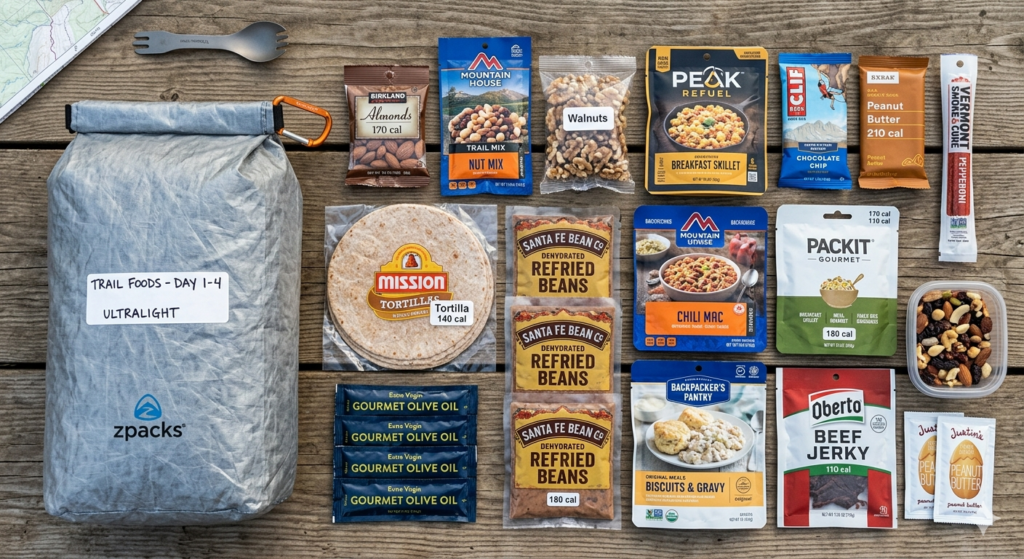
The Core of Ultralight Food Planning
Transitioning to an ultralight diet requires abandoning traditional camping meals like canned beans or heavy pre-cooked pouches.
Ultralight food planning is the strategic selection of highly caloric, nutrient-dense foods that require minimal preparation and fuel. By focusing on dehydrated items that deliver over 100 calories per ounce, hikers can sustain extreme daily exertion while keeping their total food weight as low as possible.
Water is the heaviest substance you carry. The primary goal is to carry completely dry food and rehydrate it using natural water sources found along the trail. This simple shift drastically reduces your daily consumable weight.
Maximizing Backpacking Calories Per Ounce
When analyzing a nutrition label for the trail, the most critical metric is the ratio of weight to energy.
The gold standard is achieving a minimum of 100 backpacking calories per ounce. Pure fats are the most efficient fuel source available, providing roughly 250 calories per ounce. Conversely, pure carbohydrates provide only about 110 calories per ounce. Therefore, adding healthy fats to your meals is the fastest way to shrink your food bag.
- High-Calorie Add-ins: Olive oil packets, clarified butter (ghee), and peanut butter can be added to almost any meal.
- Dense Snacks: Macadamia nuts, walnuts, and dark chocolate offer exceptional energy density.
- Base Carbohydrates: Instant mashed potatoes, couscous, and ramen noodles provide the quick-burning glycogen needed for steep ascents.
While counting calories is important, maintaining nutrient density ensures your body gets the vital sodium, potassium, and protein required for overnight muscle recovery. Do not rely entirely on sugary candy bars, as they lead to severe energy crashes.
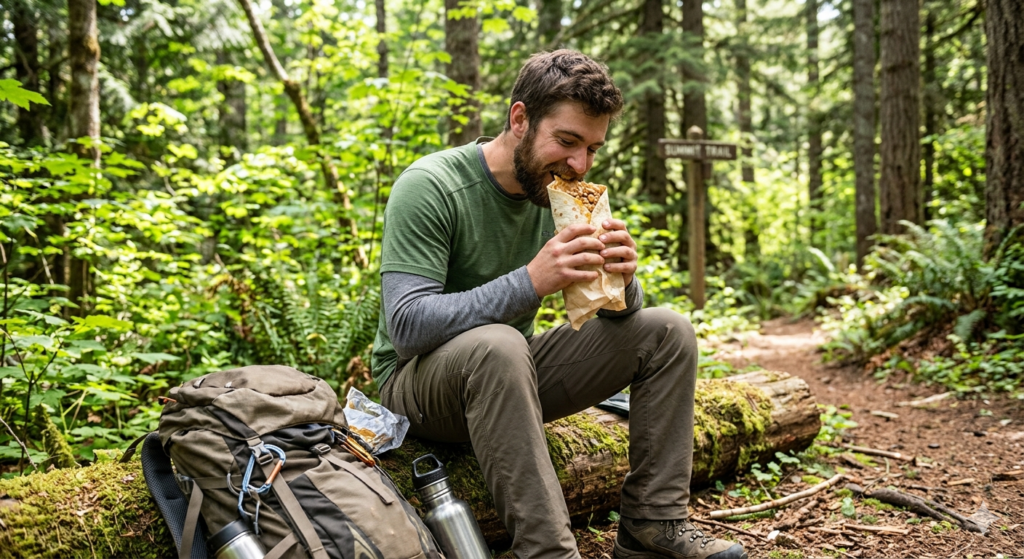
Managing “Hiker Hunger” and Resupply Strategy
If you hike long enough, your body will eventually enter a severe caloric deficit. This physiological state is universally known as hiker hunger. It is an insatiable appetite where no amount of trail mix feels satisfying.
To manage this without carrying an impossible 5 pounds of food per day, you must rely on a calculated resupply strategy. Instead of carrying ten days of food, plan your route so you intersect with a town or a resupply cache every three to four days.
When you reach town, prioritize eating fresh, heavy, calorie-rich foods (like burgers, salads, and dairy) that you cannot carry on the trail. This “town binge” replenishes your body’s deep reserves, allowing you to survive on lighter, dehydrated rations while actively hiking.
The Stoveless Cooking Revolution
One of the most effective ways to lower your base weight is to leave the kitchen at home. By eliminating your metal pot, fuel canister, and camp stove, you instantly save a pound or more of rigid, bulky weight.
This is achieved through “cold soaking.” Hikers simply place dehydrated food (like ramen, instant oats, or dehydrated refried beans) into a watertight plastic jar with cold water. You prepare the meal an hour or two before you plan to eat, letting it hydrate while you continue hiking.
By the time you stop for lunch or arrive at camp, your meal is fully soft and ready to consume. Cold soaking saves time, eliminates the danger of campfires, and requires zero cleanup effort beyond a quick rinse.
Storing Food Safely and Efficiently
Highly caloric, fragrant foods act as a magnet for backcountry wildlife. Protecting your food is not just about saving your dinner; it is about keeping yourself and the animals safe.
Never sleep with your food. Keep all your meals, trash, and scented toiletries inside a dedicated opsack (odor proof bag) to block the scent from escaping. You can then place this bag inside your bear canister or use it for a proper bear hang, depending on local regulations.
Conclusion
Mastering ultralight food planning transforms how you experience the trail. It is a delicate balancing act of providing the body with the massive energy it needs while minimizing the physical burden on your joints. By aggressively targeting high backpacking calories per ounce, embracing the simplicity of stoveless cold soaking, and managing your resupplies efficiently, you can hike farther, faster, and much more comfortably.
Frequently Asked Questions (FAQ)
1. Is cold soaked food safe to eat?
Yes, provided the ingredients are already pre-cooked and dehydrated (like instant rice, couscous, or ramen). You should never attempt to cold soak raw grains, raw beans, or raw meats, as they require boiling temperatures to become digestible and safe.
2. How much food weight should I carry per day?
A general rule for ultralight hikers is to aim for 1.5 to 2 pounds of food per day. If you pack highly caloric, dense foods (averaging 120 calories per ounce), this weight will provide roughly 2,800 to 3,800 calories daily.
3. What is the best way to add fat to my meals?
Olive oil is the king of trail fats. It has an incredible calorie-to-ounce ratio and can be drizzled over savory dinners to boost the calorie count instantly. You can carry it safely in small, leak-proof plastic squeeze bottles.
4. Will I lose weight on a long-distance hike?
Most hikers do lose body weight during a thru-hike because it is nearly impossible to carry enough food to perfectly offset the 4,000+ calories burned daily. A smart town resupply strategy helps mitigate dramatic weight loss.
5. Do I need a bear canister if I use an odor-proof bag?
Yes, if the local regulations require one (like in the Sierra Nevada or many National Parks). Odor-proof bags deter animals by hiding the smell, but if a bear physically sees or accidentally finds your food bag, only a hard-sided bear canister will prevent them from eating it.