Shivering through a freezing night in the backcountry is an experience no hiker wants to repeat. The traditional solution to cold-weather camping is to purchase a heavily insulated, high-fill-power down sleeping bag. While incredibly warm and light, these premium bags often cost upwards of $400, acting as a massive financial roadblock for budget-conscious hikers.
Fortunately, staying warm is a matter of physics, not just purchasing power. You do not need to max out your credit card to survive a cold snap on the trail. By mastering the principles of insulation, utilizing the clothing you already carry, and manipulating your sleep environment, you can push a cheap summer sleeping bag well beyond its temperature rating.
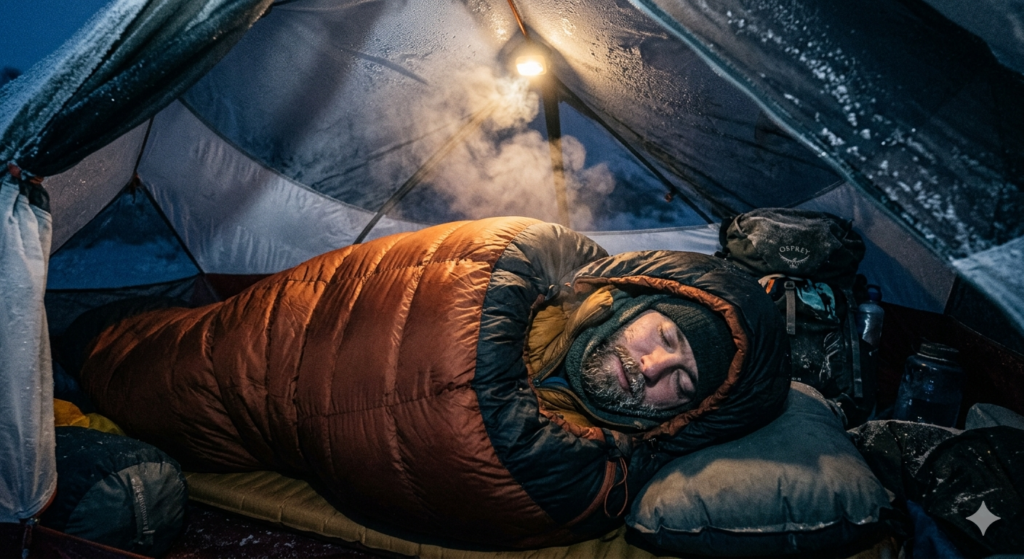
The Core Concept: What is Ultralight Warmth?
To survive cold nights on a budget, you must shift your reliance from a single piece of heavy gear to a comprehensive system.
Sleeping warm ultralight involves utilizing body heat generation, strategic site selection, and multi-use clothing layers to create a comfortable sleep environment. Rather than relying solely on a thick, expensive sleeping bag, hikers build a comprehensive thermal system using items they already carry in their backpack.
Your sleeping bag does not generate heat; your body does. The bag simply traps the heat you produce. By understanding this, you can optimize your system to prevent that precious heat from escaping.
Mastering Sleep System Layering
The most cost-effective way to boost your sleeping bag’s temperature rating is to wear your hiking clothes to bed.
Sleep system layering means treating your body like the core of a furnace. Put on your thermal base layers, your fleece, and your puffy down jacket before you get into your sleeping bag. Wearing a warm beanie or a fleece hat is particularly critical, as significant heat escapes from your exposed head and neck.
As we discussed in our core guide on How to Go Ultralight on a Budget (Complete Guide), utilizing cheap, thrifted fleece layers is a fantastic way to add warmth without spending premium prices. If your feet are chronically cold, place your empty backpack over the footbox of your sleeping bag to create an extra layer of trapped, dead air.
The Sleeping Bag Liner Hack
Many outdoor retailers sell dedicated thermal liners meant to add 10 to 15 degrees of warmth to your sleeping bag. While effective, they can be surprisingly expensive and add redundant weight.
A much cheaper sleeping bag liner alternative is simply investing in a dedicated set of slightly heavier, warm sleep clothes. A pair of thick merino wool socks and a set of grid-fleece long underwear performs the exact same function as a commercial bag liner. Furthermore, you can actually wear these clothes around camp if the weather turns severely cold, whereas a bag liner is useless outside of the tent.
The Hot Water Bottle Trick
If you know temperatures will drop below your comfort zone, you can introduce an external heat source into your sleeping bag for the cost of a few pennies of stove fuel.
The hot water bottle trick is a legendary backcountry technique. Before bed, boil a liter of water. Carefully pour it into a hard plastic water bottle (ensure the plastic is rated for boiling water, like a Nalgene). Seal the lid tightly, wrap the bottle in a spare hiking sock to prevent it from burning your skin, and place it between your thighs or at your feet inside your sleeping bag.
This bottle will radiate heat for several hours, warming the trapped air inside your sleeping bag and helping you drift comfortably to sleep during the coldest part of the night.
Site Selection for Warmth
Your environment dictates how hard your sleep system has to work. Choosing the right place to pitch your tent is completely free and massively impacts your warmth.
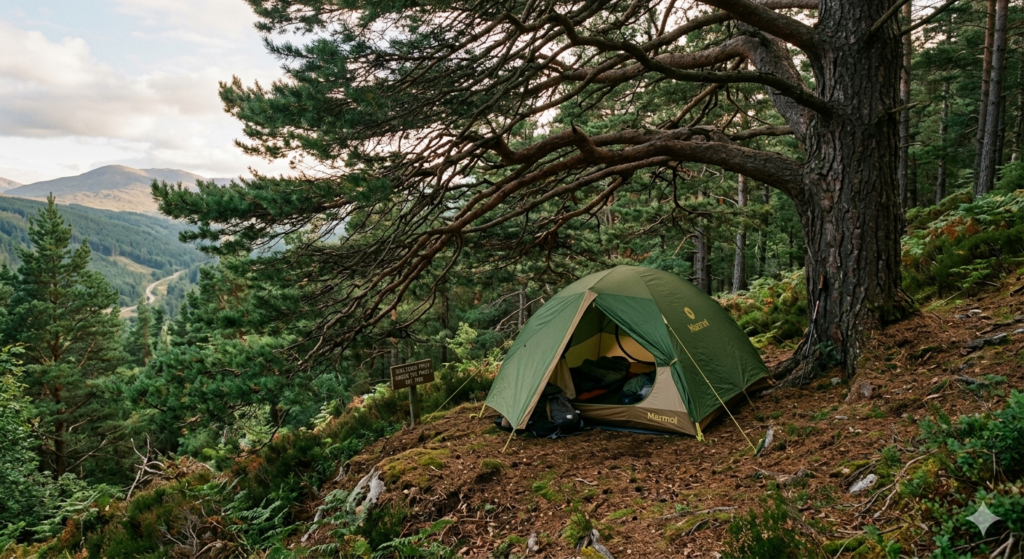
Site selection for warmth requires avoiding temperature sinks. Cold air is heavy and flows down mountainsides, settling into valley floors and depressions. Never camp at the very bottom of a valley or directly beside a freezing river. Instead, camp halfway up a hillside, nestled under a thick canopy of evergreen trees. The trees block convective heat loss from wind and act as an umbrella, trapping radiant heat near the ground.
Emergency Warmth: The Mylar Hack
If the weather forecast was wrong and you are dangerously cold, you need a way to reflect your body heat immediately.
Carrying a cheap Mylar emergency blanket in your first aid kit is highly recommended. If your sleeping pad is not insulated enough and the cold ground is sapping your heat, lay the reflective Mylar blanket directly underneath your sleeping pad. This acts as a radiant barrier, reflecting the cold downward and bouncing your body heat back up. Avoid wrapping yourself directly in Mylar inside your sleeping bag if possible, as it will trap sweat and cause severe condensation, making you colder in the long run.
Conclusion
You do not have to endure miserable, sleepless nights just because you are hiking on a strict budget. By adopting an active approach to sleeping warm ultralight, you can push the limits of inexpensive gear. Mastering sleep system layering, using the classic hot water bottle trick, and practicing smart site selection for warmth ensures that you remain safe, comfortable, and well-rested for the trail ahead.
Frequently Asked Questions (FAQ)
1. Is it a myth that wearing clothes inside a sleeping bag makes you colder?
Yes, it is completely false. Your sleeping bag works by trapping the heat your body produces. Wearing dry, insulating clothing (like a puffy jacket and fleece) adds layers of trapped dead air, making the entire system significantly warmer.
2. What should I eat before bed to stay warm?
Digestion produces metabolic heat. Eating a snack high in fats and proteins (like a spoonful of peanut butter, a handful of nuts, or a chunk of cheese) right before bed gives your body a slow-burning fuel source that keeps your internal furnace running all night.
3. Does going to the bathroom help you stay warm?
Yes. Your body expends valuable caloric energy keeping the urine in your bladder at 98.6 degrees. By emptying your bladder before bed (or using a dedicated pee bottle inside the tent), your body can redirect that energy to keeping your extremities warm.
4. How can I boost my sleeping pad’s warmth cheaply?
If your inflatable pad is too cold, go to a big-box store and buy a cheap closed-cell foam pad (often under $20). Place the foam pad directly underneath your inflatable pad. This drastically increases your total R-value (insulation) for a fraction of the cost of a winter pad.
5. Why are my feet always cold in my sleeping bag?
Your feet are the furthest extremity from your heart and have very little muscle mass to generate heat. Always wear loose, dry socks to bed. If your socks are too tight, they restrict blood flow, making your feet even colder.