For many beginners, the concept of backpacking conjures images of massive, towering rucksacks and the physical struggle of hauling 50 pounds of gear up a mountain. However, a growing movement in the outdoor community challenges this norm. By asking what is ultralight backpacking, hikers are discovering that they can travel further, faster, and more comfortably by simply carrying less.
This guide serves as a foundational resource for understanding the philosophy of ultralight hiking. We will explore the technical definitions, the mindset shift required to shed weight, and why this approach is revolutionizing trail culture.
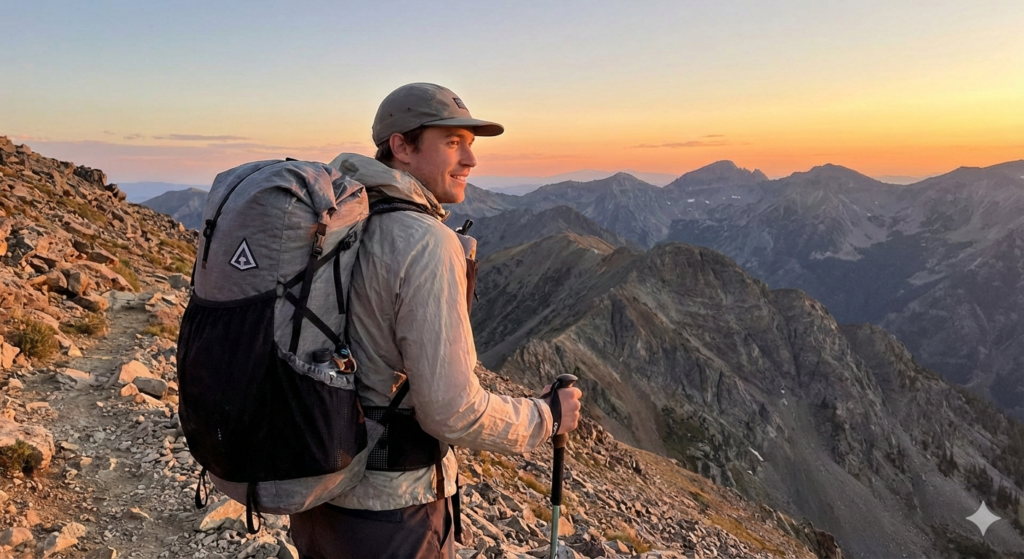
The Technical Definition: The 10-Pound Rule
While "ultralight" is often used as a marketing buzzword, it has a specific definition within the hiking community.
Ultralight backpacking is a hiking style defined by carrying a "base weight" of under 10 pounds (4.5 kilograms). This philosophy emphasizes carrying only essential gear, utilizing multi-purpose items, and choosing lighter materials to reduce physical strain and increase daily mileage potential.
Achieving this weight class is not about suffering or leaving necessary safety equipment behind. Instead, it is about optimizing your system. By analyzing every item in your pack, you move away from "packing your fears" (bringing extra items for unlikely "what-if" scenarios) and toward a calculated, skill-based approach to the outdoors.
Understanding Base Weight
To understand what is ultralight backpacking, you must first understand the metric used to measure it: Base Weight.
Base Weight Definition: This is the total weight of your loaded backpack minus "consumables" (food, water, and fuel) and the clothing you are wearing.
We exclude food and water because these weights fluctuate constantly throughout a trip. Your gear weight, however, remains constant. To accurately calculate this, you cannot rely on manufacturer specs, which are often inaccurate. You must weigh every single item you intend to carry.
Once you know your numbers, you can categorize your hiking style:
- Traditional: Base weight over 20 lbs (9+ kg).
- Lightweight: Base weight between 10 and 20 lbs (4.5–9 kg).
- Ultralight: Base weight under 10 lbs (4.5 kg).
Once you know your numbers, you can categorize your hiking style:
Ultralight Backpacking Philosophy: Skills Over Gear
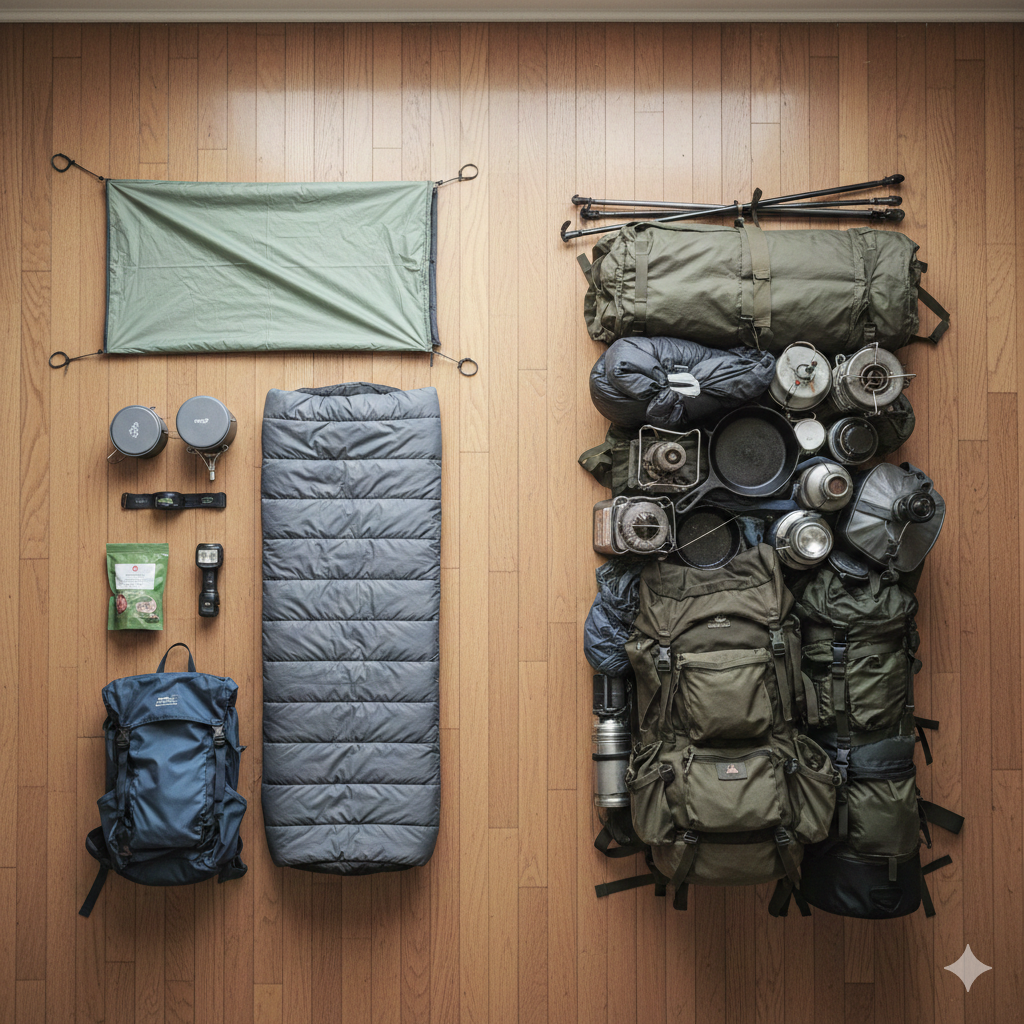
The distinction between traditional vs ultralight hiking is not just about the gear you buy; it is about the skills you possess. Traditional backpacking often relies on robust, heavy equipment to provide comfort and solve problems. If you are cold, you bring a thicker, heavier coat. If you want a chair, you pack a metal frame chair.
The ultralight backpacking philosophy relies on skills to replace weight.
- Site Selection: Instead of a heavy, bombproof 4-season tent, an ultralight hiker uses a light tarp and uses knowledge of campsite selection to avoid high-wind exposure.
- Layering: Instead of a heavy parka, an ultralight hiker combines a wind shell, a fleece, and a quilt to trap heat efficiently.
- Multi-use Gear: A trekking pole is not just for walking; it also serves as the tent pole for your shelter. A cooking pot can also serve as a mug.
This reliance on skill increases your connection to the environment. You become more aware of the weather, the terrain, and your body's needs.
Why It Matters: The Benefits of Going Lighter
Why go through the effort of weighing gear and learning new skills? The benefits are tangible and immediate.
1. Reduced Injury Risk
The most common injuries on the trail are joint-related—knees, ankles, and hips—or back issues. Reducing your pack weight by 10 to 15 pounds significantly lowers the impact force on your joints with every step. Over the course of a 20-mile day, this adds up to tons of alleviated pressure.
2. Increased Mileage and Endurance
With a lighter load, you expend less energy per mile. This allows lightweight hiking enthusiasts to cover more ground with less fatigue. Whether you are thru-hiking the Pacific Crest Trail or just trying to reach a remote campsite on a weekend trip, a lighter pack makes the movement easier.
3. Simplicity and Freedom
A heavy pack feels like a burden; an ultralight pack feels like an extension of your body. Without the bulk of unnecessary items, packing up camp in the morning becomes a 10-minute task rather than an hour-long chore. This simplicity allows you to focus more on the nature around you and less on managing your equipment.
Conclusion
So, what is ultralight backpacking? It is more than just a sub-10-pound base weight. It is a deliberate approach to outdoor travel that prioritizes efficiency, comfort, and skill acquisition. By stripping away the non-essentials, you remove the barriers between you and the wilderness. Whether you are looking to extend your hiking years by protecting your joints or aiming to crush high-mileage days, the transition to ultralight is a journey worth taking.
Frequently Asked Questions (FAQ)
1. Is ultralight backpacking expensive?
It can be, but it doesn't have to be. While high-end fabrics like Dyneema (Cuben Fiber) are pricey, you can achieve a low base weight using budget-friendly materials like silnylon and simple foam pads. The most effective way to save money is to simply buy less stuff.
2. Is ultralight backpacking safe?
Yes, when done correctly. Ultralight does not mean "stupid light." You should never leave behind essential safety gear like a first aid kit, navigation tools, or appropriate rain gear. The safety in ultralight comes from the ability to move faster and avoid exhaustion, helping you get out of dangerous weather conditions quickly.
3. Do I have to use a tarp to be ultralight?
No. While tarps are the lightest shelter option, many ultralight hikers use double-wall tents that are designed with lightweight materials. The goal is to find the lightest option that still meets your comfort and protection needs.
4. What is the difference between base weight and total pack weight?
Base weight is the weight of your gear only (pack, shelter, sleeping bag, clothes in pack, electronics). Total pack weight includes your base weight plus consumables (food, water, and fuel). Consumables vary by trip length, while base weight remains relatively constant.
5. How do I start transitioning to ultralight?
Start by weighing every item you currently own using a kitchen scale. Create a spreadsheet to visualize where your weight is coming from. The "Big 3" (backpack, shelter, and sleep system) are usually the heaviest items and offer the biggest opportunities for weight reduction.