One of the most intimidating aspects of lightening your backpack is the perceived cost. High-tech fabrics and specialized outdoor equipment often come with premium price tags. However, there is a thriving subculture within the backpacking community that rejects the retail markup entirely. Instead of buying their equipment, they build it.
Stepping into the world of diy ultralight gear allows you to fully customize your kit, understand exactly how your equipment functions, and save hundreds of dollars. You do not need to be a master seamstress or a mechanical engineer to get started. This guide covers a few highly functional, beginner-friendly projects that you can complete at home in a single afternoon.
What is DIY Ultralight Gear (MYOG)?
Before breaking out the scissors and materials, it is helpful to understand the philosophy behind this crafting movement.
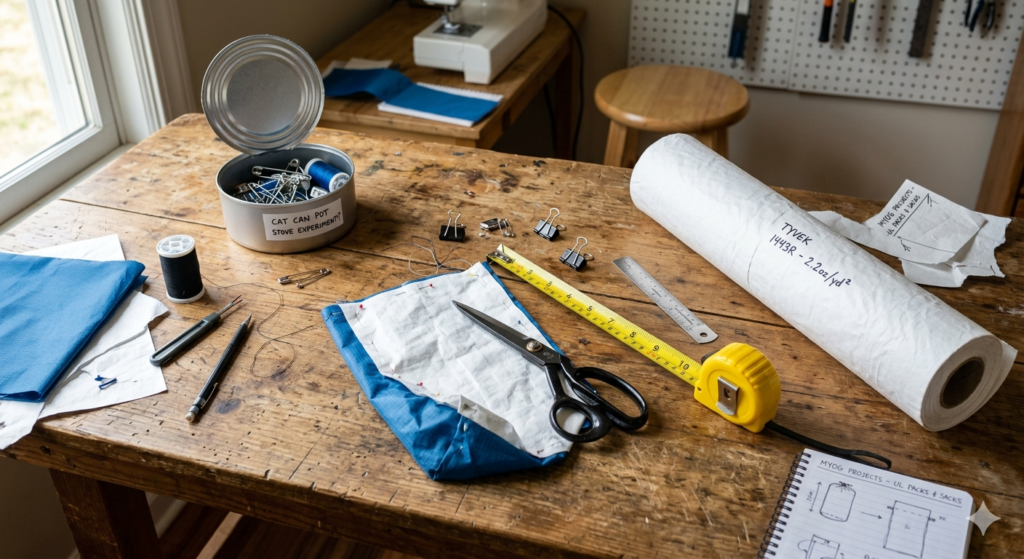
DIY ultralight gear, often referred to as MYOG (Make Your Own Gear), is the practice of crafting, modifying, or repurposing hiking equipment at home to save money and reduce base weight. Beginners often start with simple projects like building alcohol stoves or cutting custom ground sheets.
As we explored in our foundational resource on How to Go Ultralight on a Budget (Complete Guide), building your own gear is the ultimate expression of backcountry self-reliance. When you make a piece of equipment yourself, you know exactly how to repair it in the field if it breaks.
Project 1: The Classic Fancy Feast Stove
The quintessential introductory MYOG project is the alcohol stove. It requires zero sewing and takes less than ten minutes to complete, yet it can completely replace a heavy commercial canister stove.
A fancy feast stove is made using an empty 3-ounce aluminum cat food can.
- Clean: Empty and thoroughly wash the aluminum can.
- Punch Holes: Use a standard single-hole paper punch to create a row of holes evenly spaced around the top rim of the can.
- Fuel Up: Pour a small amount of denatured alcohol or HEET fuel-line antifreeze into the bottom.
- Light: Light the fuel. As the can heats up, the alcohol vaporizes and jets out of the punched holes, creating a ring of blue flame to boil your water pot.
This stove weighs roughly 0.3 ounces (9 grams) and costs about a dollar to create, making it a favorite among thru-hikers.
Project 2: The Custom Tyvek Footprint
Protecting your expensive sleeping pad and tent floor from sharp rocks is vital. However, brand-name footprints are surprisingly heavy and expensive. You can make a superior alternative using construction materials.
A tyvek footprint utilizes the waterproof, highly puncture-resistant wrap used to protect houses during construction.
- Measure: Pitch your tent at home and measure the floor dimensions.
- Cut: Cut a sheet of Tyvek so it is roughly two inches smaller than your tent floor on all sides. This prevents rainwater from pooling on the exposed Tyvek and running under your tent.
- Modify: If you are using a floorless tarp setup, you can fold the edges of the Tyvek up to create a bathtub floor. Secure the corners firmly using waterproof Tyvek Tape for maximum durability.
To eliminate the loud, crinkly sound of brand-new Tyvek, run the cut sheet through your washing machine on a cold cycle without detergent, then hang it to dry. It will emerge feeling soft like fabric.
Project 3: Lightweight Stuff Sacks
Once you are comfortable with basic projects, moving on to simple sewing tasks opens up a world of customization. Heavy, commercial dry bags add unnecessary weight to your base loadout.
Creating custom stuff sacks is the perfect way to learn how to operate a sewing machine.
- Materials: Purchase a few yards of cheap, lightweight ripstop nylon or noseeum mesh.
- Cut and Fold: Cut a rectangle to your desired size. Fold it in half so the “good” sides are facing inward.
- Sew: Sew the side and bottom edges shut.
- The Drawstring: Fold the top edge down by an inch and sew it to create a tubular channel. Thread a lightweight paracord through the channel and attach a mini cord lock.
You can create specific, perfectly sized bags for your tent stakes, your cooking pot, or your electronics, ensuring no excess fabric weight is carried.
Conclusion
Building your own diy ultralight gear is a highly rewarding endeavor that connects you more deeply to your backcountry experience. Whether you start by punching holes in a can for a fancy feast stove or cutting a tyvek footprint, every project teaches you about material limits and trail efficiency. By embracing the MYOG (make your own gear) philosophy, you stop relying on expensive brands and start relying on your own resourcefulness.
Frequently Asked Questions (FAQ)
1. Is MYOG (Make Your Own Gear) difficult for beginners?
Not at all. While making a fully waterproof backpack or a down sleeping quilt requires advanced sewing skills, there are dozens of “no-sew” projects—like making stoves, cutting ground sheets, or creating reflective guy lines—that anyone can do in minutes.
2. Where do I buy materials for MYOG projects?
Specialty online retailers like Ripstop by the Roll or DutchWare Gear sell high-tech outdoor fabrics (like Silnylon and Dyneema) by the yard, along with specialized hardware, zippers, and cordage.
3. What kind of fuel does a DIY alcohol stove use?
Most hikers use denatured alcohol (found in the paint aisle of hardware stores) or Yellow HEET (a gas-line antifreeze found in auto parts stores). Never use white gas or camp fuel in an alcohol stove, as it can explode.
4. Do I need a heavy-duty sewing machine for DIY gear?
For beginner projects like stuff sacks or simple tarps, a standard household sewing machine is perfectly adequate. You only need a heavy-duty or industrial machine when sewing through multiple layers of thick backpack webbing or heavy canvas.
5. How do I make my DIY stuff sacks waterproof?
If you sew a stuff sack using waterproof fabric (like Silpoly), water can still leak through the holes created by your sewing needle. You must paint the seams from the inside using a liquid silicone seam sealer to make the bag fully waterproof.