Ultralight backpacking has an unfortunate reputation for being an incredibly expensive hobby. Browse any outdoor catalog, and you will quickly see specialized tents and custom sleeping quilts selling for hundreds, if not thousands, of dollars. For many beginners, this high financial barrier is enough to keep them hauling 40-pound traditional packs forever.
However, shedding weight from your back does not require emptying your bank account. Achieving ultralight backpacking on a budget is entirely possible if you are willing to trade premium brand names for creativity and practicality. This comprehensive guide will teach you how to source affordable alternatives, bypass the outdoor industry markup, and build a highly functional kit for a fraction of the standard cost.
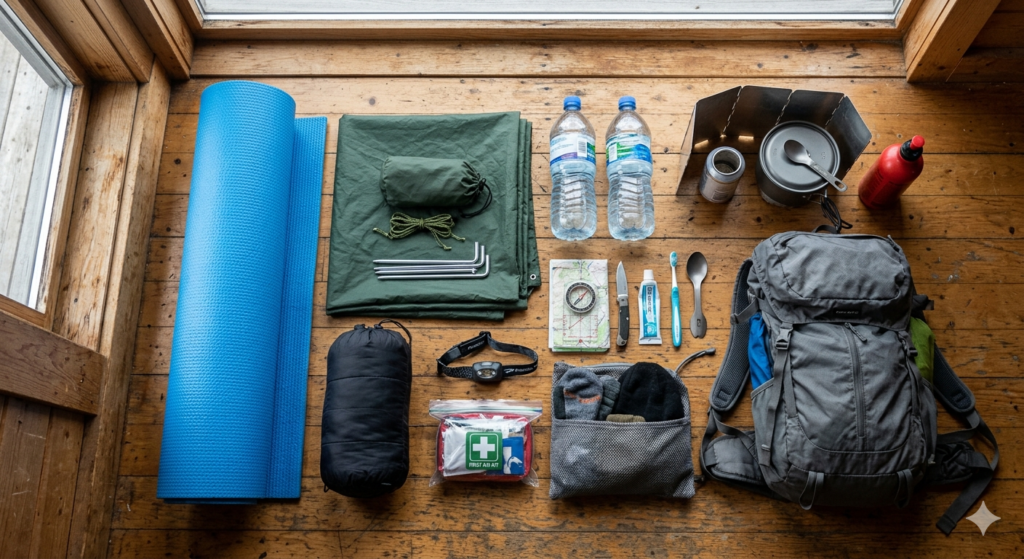
The Core Concept of Budget Ultralight
Before shopping for cheaper alternatives, it is crucial to understand the philosophy behind budget optimization on the trail.
Ultralight backpacking on a budget is the practice of reducing your base weight below 10 pounds without buying expensive, premium materials. It relies on utilizing cheap hiking gear, repurposing household items, and buying direct-to-consumer alternatives to achieve a highly efficient, minimalist setup affordably.
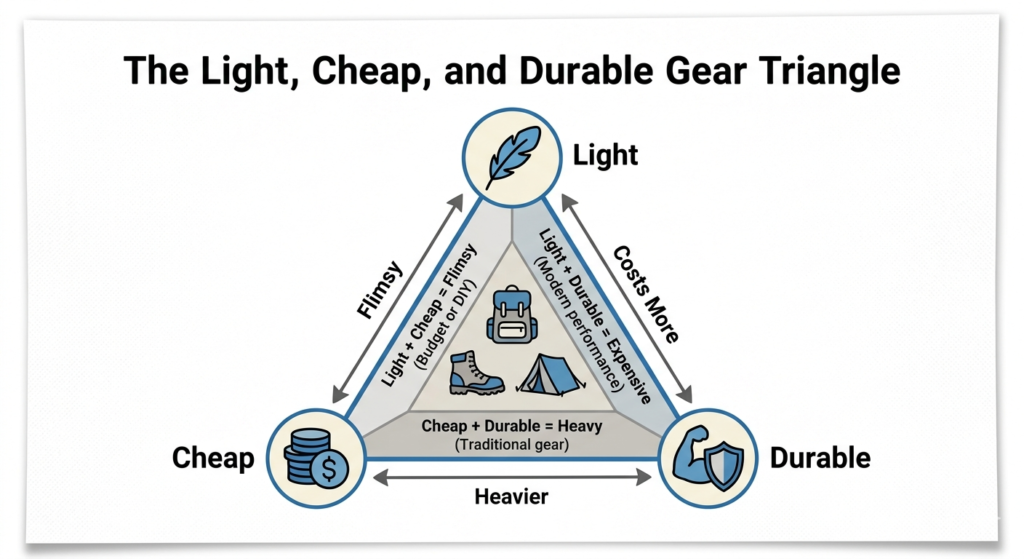
The golden rule of outdoor gear states that out of three attributes—light, durable, and cheap—you can only pick two. When building an inexpensive ultralight kit, you are often choosing “light and cheap,” which means you must treat your gear with greater care to ensure it lasts.
Thrift Store Hiking and Household Hacks
The absolute cheapest gear is the gear you already own or can buy secondhand. You do not need specialized, branded clothing to survive in the wilderness.
Thrift store hiking is a staple of the budget ultralight community. Instead of spending $80 on a branded hiking shirt, you can often find lightweight polyester athletic shirts or nylon button-downs at a local thrift shop for a few dollars. A $5 used fleece sweater offers nearly the exact same warmth-to-weight ratio as a $150 designer mid-layer.
Furthermore, look around your kitchen. Heavy Nalgene water bottles can be replaced instantly with empty, disposable plastic water bottles. Expensive titanium cooking pots can sometimes be replaced by a simple, repurposed aluminum grease pot found at discount stores.
Exploring “Aliexpress Camping” Brands
In recent years, the outdoor market has been disrupted by overseas manufacturers selling directly to consumers through massive online marketplaces.
The aliexpress camping route involves purchasing unbranded or lesser-known Asian brands (like Naturehike, 3F UL Gear, or BRS) that produce direct “homages” to popular western ultralight designs. These companies often use standard silnylon instead of ultra-expensive Dyneema, significantly driving down the cost.
For example, a name-brand ultralight trekking pole tent might cost $400, while a nearly identical silnylon version from an overseas vendor might cost $100. While the stitching and quality control may not rival premium cottage companies, the weight savings and functional value for a hiker on a strict budget are undeniable.
Building a Budget Ultralight Gear List
When constructing your budget ultralight gear list, focus your limited funds strategically. Do not spend money upgrading small items until you have addressed the “Big 3” (Shelter, Sleep System, Backpack).
- The Shelter: Skip the freestanding tents. A flat silnylon tarp combined with a cheap polycryo ground sheet (window shrink film) can weigh under a pound and cost less than $50.
- The Sleep System: Instead of an $80 inflatable pad, buy a $20 closed-cell foam pad. For insulation, look for synthetic quilts or budget-friendly down sleeping bags on sale. Synthetic insulation is heavier and bulkier than down, but it is vastly cheaper and performs better when wet.
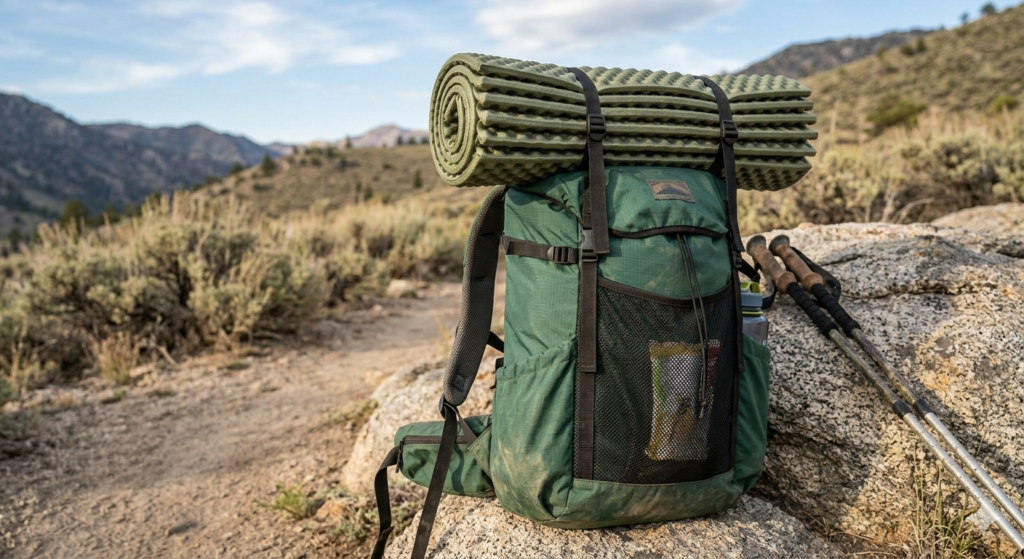
- The Backpack: Once your gear is small and light enough, you can purchase a simple, frameless nylon backpack. Because frameless packs lack complex suspensions and metal stays, they are naturally cheaper to produce and purchase.
The Cost of Free Weight Savings
As we frequently emphasize, the most effective way to lower your base weight costs absolutely nothing: just bring less stuff.
Before spending a single dollar, perform a ruthless audit of your current gear. Remove the extra camp shoes, the redundant pocket knives, the heavy stuff sacks, and the oversized toiletry kits. Leaving a two-pound camp chair at home gives you the exact same weight reduction as spending $600 to upgrade your tent.
Conclusion
The wilderness does not care how much your backpack costs. Ultralight backpacking on a budget is an exercise in resourcefulness, proving that you can travel efficiently without premium labels. By embracing thrift store hiking for your apparel, selectively utilizing the aliexpress camping market for shelters, and ruthlessly leaving non-essentials behind, you can build a highly effective kit. Ultimately, spending less money on gear leaves you with more money to spend on the actual journey.
Frequently Asked Questions (FAQ)
1. Is cheap ultralight gear safe to use?
Yes, provided you test it before relying on it in remote wilderness. Cheap gear is often less durable, meaning a cheap zipper might break or a budget tarp might tear in high winds. Always do a “shakedown hike” close to home to test the limits of budget equipment.
2. Are cheap sleeping bags warm enough?
Budget sleeping bags often exaggerate their temperature ratings. A cheap bag rated for 20°F might only be comfortable down to 40°F. Always read user reviews carefully, and consider wearing your fleece or down jacket inside the budget bag to boost its warmth safely.
3. What is the cheapest way to drop 5 pounds from my pack?
The cheapest way is simply removing 5 pounds of non-essential items you already carry. Leave the extra clothes, the heavy multi-tool, the camp chair, and the oversized electronics at home. It costs zero dollars to leave gear in your closet.
4. Is Tyvek a good budget gear material?
Yes. Tyvek (the material used to wrap houses during construction) is highly water-resistant, incredibly durable, and very cheap. Hikers frequently buy small sheets of it online or ask for scraps at construction sites to use as lightweight, nearly indestructible ground sheets.
5. How long does cheap overseas gear last?
This varies wildly by manufacturer. Some budget silnylon tents can last for thousands of miles if treated delicately. However, because budget gear prioritizes “light and cheap,” the materials are often fragile. Treating the gear with extreme care is mandatory to extend its lifespan.